Textbook Question
Predict the product(s) that would result when molecules (a)–(p) are allowed to react under the following conditions: (v) 1. TsCl, Et₃N 2. NaOt-Bu (vi) H₂SO₄ If no reaction occurs, write 'no reaction.'
(o)
6
views

 Mullins 1st EditionCh. 13 - Alcohols, Ethers and Related Compounds: Substitution and EliminationProblem 106o(i-xii)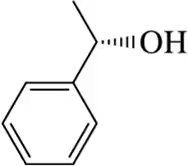
 Verified step by step guidance
 02:36
02:36
 02:17 02:36
Predict the product(s) that would result when molecules (a)–(p) are allowed to react under the following conditions: (v) 1. TsCl, Et₃N 2. NaOt-Bu (vi) H₂SO₄ If no reaction occurs, write 'no reaction.'
(o)
Triphenylphosphine and iodine can be used to convert alcohols to iodoalkanes. Suggest a mechanism for this reaction. [Triphenylphosphine first acts as a nucleophile in this reaction.]
Predict the product(s) that would result when molecules (a)–(p) are allowed to react under the following conditions: (ix) PCC; (x) H₂CrO₄ , H₂O. If no reaction occurs, write 'no reaction.'
(o)
Cleavage of the following ether produces the alcohol and haloalkane only, regardless of how much HBr is used. Thinking about the mechanism of the reaction, explain why bromobenzene is not also a product of this reaction.
Predict the product(s) that would result when molecules (a)–(p) are allowed to react under the following conditions: (xi) HOCl, H₂O (xii) HIO₄ If no reaction occurs, write 'no reaction.'
(o)
Predict the product(s) that would result when molecules (a)–(p) are allowed to react under the following conditions: (iii) SOCl₂ , NEt₃ (iv) 1. TsCl, Et₃N 2. NaCN; If no reaction occurs, write 'no reaction.'
(o)