Textbook Question
Crown ethers are able to solvate cations based on their size. Specifically, 15-crown-5 forms stable complexes with sodium. How would the addition of a crown ether change the rate of an SN2 reaction?

 Mullins 1st EditionCh. 12 - Substitution and Elimination: Reactions of HaloalkanesProblem 77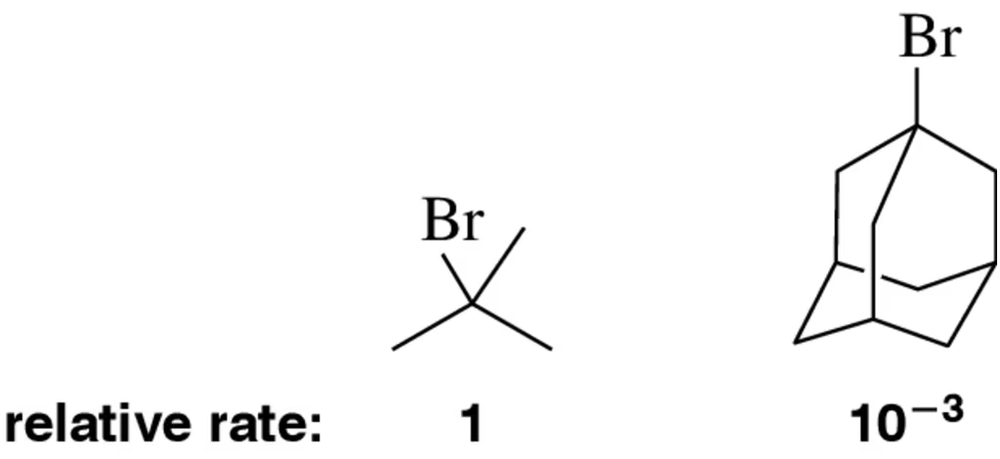
 Verified step by step guidance
 02:16
02:16
 05:58
05:58 08:27
08:27Crown ethers are able to solvate cations based on their size. Specifically, 15-crown-5 forms stable complexes with sodium. How would the addition of a crown ether change the rate of an SN2 reaction?
In this, and previous, chapters, we have seen 1,2-alkyl and 1,2-hydride shifts. If both are possible, as in the carbocation shown, which would you expect to occur? Explain your answer.
Suggest a mechanism for the following reactions.
(b) Substitution :
Of the three possible elimination mechanisms (Figure 12.50), this chapter focused on two of them (E1 and E2). The third possibility occurs in situations like the one below. What makes this mechanism favored under these conditions?
In Chapter 8, we learned about the chemistry of terpenes and the interesting reactions they can undergo. One such reaction is the acid-catalyzed conversion of nerol to terpineol. Suggest a mechanism for this transformation
.
Suggest a mechanism for the following reactions.
(c) Elimination: