Textbook Question
Using the bond-dissociation energies in Table 5.6,
(a) predict whether or not an iodine radical would be selective for forming a single radical propane.
1
views

 Mullins 1st EditionCh. 11 - Properties and Synthesis of Alkyl Halides: Radical ReactionsProblem 16d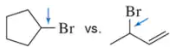
 Verified step by step guidance
 03:43
03:43
 04:09 03:43
Using the bond-dissociation energies in Table 5.6,
(a) predict whether or not an iodine radical would be selective for forming a single radical propane.
Based on the stability of the radicals produced, predict which bond in each pair would have the higher bond-dissociation energy.
(c)
Using the bond-dissociation energies in Table 5.6,
(a) predict whether or not a fluorine radical would be selective for forming a single radical from propane.
Using the bond-dissociation energies in Table 5.6,
(b) Will the transition state be reactant-like or product-like? Explain your answer.
Based on the stability of the radicals produced, predict which bond in each pair would have the higher bond-dissociation energy.
(a)
Based on the stability of the radicals produced, predict which bond in each pair would have the higher bond-dissociation energy.
(b)