Textbook Question
Two bromoethers are obtained from the reaction of the following alkyl dihalide with methanol. Draw the structures of the ethers.
4
views

 Bruice 8th EditionCh. 9 - Substitution and Elimination Reactions of Alkyl HalidesProblem 108c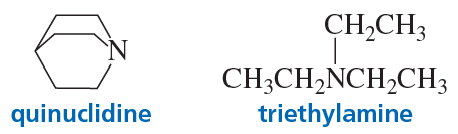
 Verified step by step guidance
 08:27
08:27
 2:29
2:29 01:16
01:16Two bromoethers are obtained from the reaction of the following alkyl dihalide with methanol. Draw the structures of the ethers.
The rate of the reaction of methyl iodide with quinuclidine was measured in nitrobenzene, and then the rate of the reaction of methyl iodide with triethylamine was measured in the same solvent. The concentration of the reagents was the same in both experiments.
b. The same experiment was done using isopropyl iodide instead of methyl iodide. Which reaction had the larger rate constant?
In which solvent—ethanol or diethyl ether—would the equilibrium for the following SN2 reaction lie farther to the right?
Draw the substitution products for each of the following SN2 reactions. If the products can exist as stereoisomers, show which stereoisomers are formed:
a. (3S,4S)-3-bromo-4-methylhexane + CH3O-
b. (3S,4R)-3-bromo-4-methylhexane + CH3O-
The rate of the reaction of methyl iodide with quinuclidine was measured in nitrobenzene, and then the rate of the reaction of methyl iodide with triethylamine was measured in the same solvent. The concentration of the reagents was the same in both experiments.
a.Which reaction had the larger rate constant?
Draw the substitution products for each of the following SN2 reactions. If the products can exist as stereoisomers, show which stereoisomers are formed:
c. (3R,4R)-3-bromo-4-methylhexane + CH3O-
d. (3R,4S)-3-bromo-4-methylhexane + CH3O-