Ch. 11 - Organometallic Compounds
Bruice - Organic Chemistry 8th Edition
Bruice8th EditionOrganic ChemistryISBN: 9780135213711Not the one you use?Change textbook
Chapter 12, Problem 32a,b

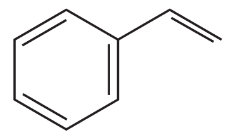
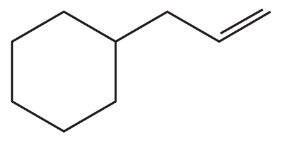
What alkyl halide reacts with lithium divinylcuprate [(CH2=CH)2CuLi] for the synthesis of each of the following compounds?
a.
b.

Verified step by step guidance
1
Step 1: Analyze the target compounds provided in the images. The first compound is styrene (benzene ring attached to a vinyl group), and the second compound is cyclohexylvinyl (cyclohexane ring attached to a vinyl group).
Step 2: Recall the reaction mechanism of lithium divinylcuprate [(CH2=CH)2CuLi]. This reagent is used in nucleophilic substitution reactions to introduce vinyl groups onto alkyl halides.
Step 3: For the synthesis of styrene, the alkyl halide required would be benzyl bromide (C6H5CH2Br). The lithium divinylcuprate will replace the bromine atom with a vinyl group.
Step 4: For the synthesis of cyclohexylvinyl, the alkyl halide required would be cyclohexyl bromide (C6H11Br). The lithium divinylcuprate will replace the bromine atom with a vinyl group.
Step 5: Ensure the reaction conditions are suitable for the cuprate substitution reaction, typically involving an aprotic solvent like THF and low temperatures to prevent side reactions.

Verified video answer for a similar problem:

This video solution was recommended by our tutors as helpful for the problem above.
Video duration:
4m
Was this helpful?

Key Concepts

Here are the essential concepts you must grasp in order to answer the question correctly.

Alkyl Halides

Alkyl halides are organic compounds containing a carbon atom bonded to a halogen atom (F, Cl, Br, I). They are important in organic synthesis due to their reactivity, particularly in nucleophilic substitution and elimination reactions. Understanding the structure and reactivity of different alkyl halides is crucial for predicting their behavior in reactions with reagents like lithium divinylcuprate.
Recommended video:
Guided course
01:52
How to name alkyl halides

Lithium Divinylcuprate

Lithium divinylcuprate (LiC2H3)2CuLi is a reagent used in organic synthesis, particularly for the selective coupling of alkyl halides to form new carbon-carbon bonds. It acts as a nucleophile, attacking electrophilic centers in alkyl halides. Recognizing its reactivity and the types of alkyl halides it can effectively react with is essential for successful synthesis.
Recommended video:
Guided course
01:17
Reactivity of Molecules

Nucleophilic Substitution Reactions

Nucleophilic substitution reactions involve the replacement of a leaving group (like a halide) by a nucleophile. These reactions can follow either an SN1 or SN2 mechanism, depending on the structure of the alkyl halide and the conditions of the reaction. Understanding these mechanisms helps in predicting the outcome of reactions involving alkyl halides and nucleophiles like lithium divinylcuprate.
Recommended video:
Guided course
01:47
Nucleophiles and Electrophiles can react in Substitution Reactions.