Ch. 10 - Reactions of Alcohols, Ethers, Epoxides, Amines, and Sulfur-Containing Compounds
Bruice - Organic Chemistry 8th Edition
Bruice8th EditionOrganic ChemistryISBN: 9780135213711Not the one you use?Change textbook
Chapter 11, Problem 90

Which of the following reactions occurs more rapidly?

Verified step by step guidance
1
Identify the type of reactions presented in the image. Common types include substitution, elimination, addition, or rearrangement reactions.
Examine the structure of the reactants and the conditions provided (such as temperature, solvent, or catalyst) to determine the mechanism that each reaction might follow.
Consider the stability of any intermediates that may form during the reaction. For example, carbocation stability can significantly influence the rate of a reaction.
Evaluate the leaving group ability and nucleophile strength if the reactions involve nucleophilic substitution. A better leaving group or stronger nucleophile can increase the reaction rate.
Compare the steric and electronic effects in each reaction. Bulky groups or electron-withdrawing/donating groups can affect the reaction rate by influencing the transition state or intermediate stability.

Verified video answer for a similar problem:

This video solution was recommended by our tutors as helpful for the problem above.
Video duration:
5m
Was this helpful?

Key Concepts

Here are the essential concepts you must grasp in order to answer the question correctly.

Reaction Mechanisms

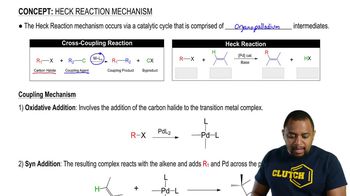
Understanding reaction mechanisms is crucial in organic chemistry as they describe the step-by-step process by which reactants transform into products. Different mechanisms can involve various pathways, including nucleophilic substitutions or eliminations, which can significantly affect the rate of a reaction. Analyzing the mechanism helps predict which reaction will occur more rapidly based on factors like sterics and electronics.
Recommended video:
Guided course
02:16
Heck Reaction Mechanism

Kinetics

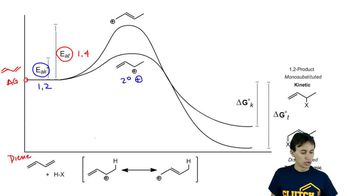
Kinetics is the study of the rates of chemical reactions and the factors that influence them. It involves understanding how concentration, temperature, and catalysts affect reaction speed. By applying principles of kinetics, one can determine which reaction is likely to proceed faster by examining the activation energy and the transition states involved.
Recommended video:
Guided course
08:51
Kinetic vs. Thermodynamic Control

Substituent Effects

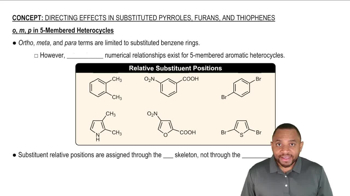
Substituent effects refer to how different groups attached to a molecule influence its reactivity and stability. Electron-donating or withdrawing groups can stabilize or destabilize intermediates in a reaction, thereby affecting the overall rate. Recognizing these effects is essential for predicting which reaction will occur more rapidly based on the nature of the substituents present.
Recommended video:
2:02
Directing Effects in Substituted Pyrroles, Furans, and Thiophenes Concept 1