Ch. 1 - Remembering General Chemistry: Electronic Structure and Bonding (Part 2)
Bruice - Organic Chemistry 8th Edition
Bruice8th EditionOrganic ChemistryISBN: 9780135213711Not the one you use?Change textbook
Chapter 2, Problem 48

If the dipole moment of CH3F is 1.847 D and the dipole moment of CD3F is 1.858 D, which is more electronegative: hydrogen or deuterium?

Verified step by step guidance
1
Understand the problem: The dipole moment is a measure of the separation of positive and negative charges in a molecule. A higher dipole moment indicates a greater charge separation. Here, we are comparing the dipole moments of CH3F and CD3F to determine whether hydrogen (H) or deuterium (D) is more electronegative.
Recall the concept of electronegativity: Electronegativity is the ability of an atom to attract electrons in a bond. If deuterium (D) is more electronegative than hydrogen (H), it will pull electron density more strongly, potentially affecting the dipole moment of the molecule.
Analyze the given data: The dipole moment of CH3F is 1.847 D, while the dipole moment of CD3F is 1.858 D. Notice that the dipole moment increases slightly when hydrogen is replaced with deuterium.
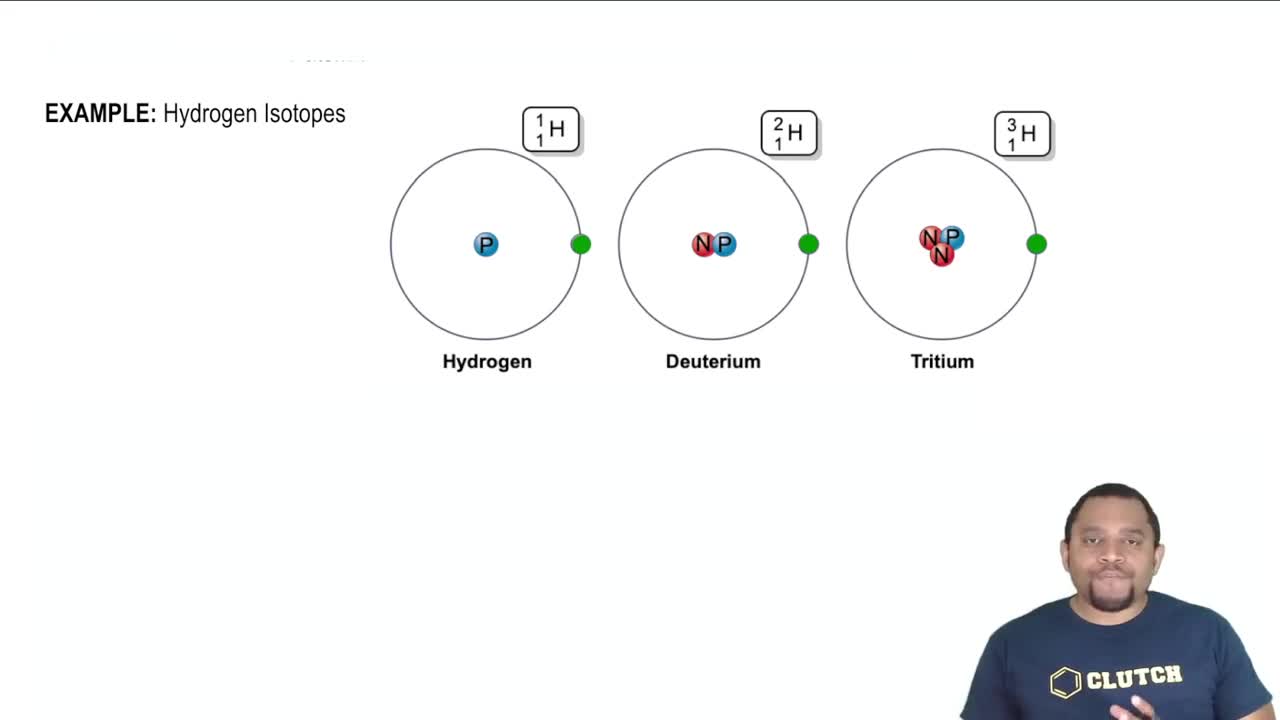
Consider the effect of replacing H with D: Deuterium is an isotope of hydrogen with an additional neutron, making it heavier but chemically similar. If deuterium were more electronegative than hydrogen, it would pull electron density slightly more toward itself, leading to a change in the dipole moment.
Conclude based on the trend: Since the dipole moment increases when H is replaced with D, this suggests that deuterium is slightly more electronegative than hydrogen, as it causes a greater charge separation in the molecule.

Verified video answer for a similar problem:

This video solution was recommended by our tutors as helpful for the problem above.
Video duration:
2m
Was this helpful?

Key Concepts

Here are the essential concepts you must grasp in order to answer the question correctly.

Dipole Moment

The dipole moment is a measure of the separation of positive and negative charges in a molecule, indicating its polarity. It is a vector quantity, represented in Debye (D), and reflects how strongly a molecule can interact with an electric field. A higher dipole moment suggests greater polarity, which can be influenced by the electronegativity of the atoms involved.
Recommended video:
Guided course
01:46
How dipole-dipole forces work.

Electronegativity

Electronegativity is the tendency of an atom to attract electrons in a chemical bond. It is a key factor in determining the polarity of a bond; more electronegative atoms pull electron density towards themselves, creating a dipole. In this context, comparing the dipole moments of CH3F and CD3F helps infer the relative electronegativities of hydrogen and deuterium.
Recommended video:
Guided course
1:47
Electronegativity

Isotopes and Their Effects

Isotopes are variants of a chemical element that have the same number of protons but different numbers of neutrons. In the case of hydrogen (H) and deuterium (D), the presence of an additional neutron in deuterium affects its mass and, consequently, its bond characteristics. This can influence the dipole moment measurements, providing insights into the relative electronegativities of the isotopes.
Recommended video:
Guided course
03:06
Understanding the hydrogen isotopes.