Skip to main content
Organic Chemistry
My Course
Learn
Exam Prep
AI Tutor
Study Guides
Textbook Solutions
Flashcards
Explore
Try the app
My Course
Learn
Exam Prep
AI Tutor
Study Guides
Textbook Solutions
Flashcards
Explore
Try the app
Back
Organic Chemistry Reactions quiz #7
You can tap to flip the card.
What enzymes are required to produce a recombinant plasmid?
You can tap to flip the card.
👆
What enzymes are required to produce a recombinant plasmid?
Restriction enzymes and DNA ligase were required to produce the recombinant plasmid.
Track progress
Control buttons has been changed to "navigation" mode.
1/39
Related flashcards
Related practice
Recommended videos
Organic Chemistry Reactions quiz #1
Overview of Chemical Reactions
39 Terms
Organic Chemistry Reactions quiz #2
Overview of Chemical Reactions
38 Terms
Organic Chemistry Reactions quiz #3
Overview of Chemical Reactions
39 Terms
Organic Chemistry Reactions
3. Acids and Bases
1 problem
Topic
Reaction Mechanism
3. Acids and Bases
7 problems
Topic
Johnny
3. Acids and Bases - Part 1 of 2
4 topics
10 problems
Chapter
Laura
3. Acids and Bases - Part 2 of 2
3 topics
9 problems
Chapter
Johnny
01:34
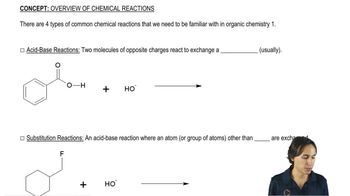
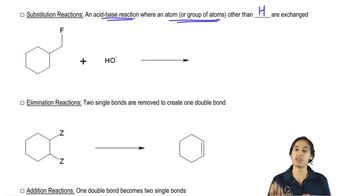
Recognizing Substitution Reactions.
17
views
02:43
Recognizing Acid-Base Reactions.
13
views
1
rank
00:40
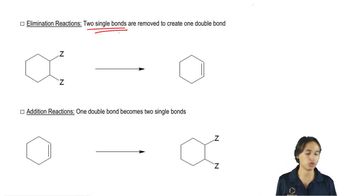
Recognizing Elimination Reactions.
7
views
Terms in this set (39)
Hide definitions
What enzymes are required to produce a recombinant plasmid?
Restriction enzymes and DNA ligase were required to produce the recombinant plasmid.
Which plate(s) is/are selective for the transformed bacterial cells?
Plates containing antibiotics are selective for transformed bacterial cells with resistance genes.
How are spores dispersed?
Spores are dispersed by wind, water, or animals.
What is the correct sequence of events that occur in a PCR reaction?
The correct sequence is denaturation, annealing, and extension.
Which is the correct order of steps in Gram staining?
The correct order is crystal violet, iodine, alcohol decolorization, and safranin.
Which vitamin is used to treat pellagra?
Niacin (vitamin B3) is used to treat pellagra.
What is an example of bioremediation?
Using bacteria to degrade oil spills is an example of bioremediation.
Why do scientists apply the concept of maximum parsimony?
Scientists apply maximum parsimony to construct phylogenetic trees with the fewest evolutionary changes.
Is vitamin C a carcinogen?
Vitamin C is not a carcinogen.
What are examples of synthetic antimicrobial drugs?
Fluoroquinolones and sulfonamides are synthetic antimicrobial drugs.
What describes a double-blind experiment?
In a double-blind experiment, neither the participants nor the researchers know who is receiving the treatment or placebo.
What does the decimal reduction time measure?
The decimal reduction time refers to the time it takes to reduce a microbial population by 90%.
What percentage of the offspring will show recombinant phenotypes resulting from crossovers?
The percentage depends on the genetic distance between loci and the frequency of crossovers.
What is the product of the carbon fixation reaction catalyzed by rubisco in the Calvin cycle?
The product is 3-phosphoglycerate (3-PGA).
What is the source of hydrogen in oxygenic photosynthesis?
Water is the source of hydrogen in oxygenic photosynthesis.
Which types of point mutations typically cause the most significant changes?
Nonsense and frameshift mutations typically cause the most significant changes.
Which disease is not caused by a prion?
Influenza is not caused by a prion; it is caused by a virus.
What most limits aquatic primary productivity?
Aquatic primary productivity is most limited by nutrient availability.
What is an indirect method of measuring numbers of bacterial cells?
Turbidity measurement is an indirect method of measuring bacterial cell numbers.
How do prions propagate and replicate themselves?
Prions propagate by inducing normal proteins to misfold into the prion form.
What type of mutation is most likely caused by insertions or deletions of nucleotides not in multiples of three?
Insertions or deletions of nucleotides that are not in multiples of three are most likely to result in a frameshift mutation.
Which type of mutation results from exposure to a mutagen?
Induced mutations result from exposure to a mutagen.
What does the retroviral enzyme reverse transcriptase do?
Reverse transcriptase synthesizes DNA from an RNA template.
What is true about the intake of vitamins?
Vitamins are essential nutrients that must be obtained from the diet.
What are the three phases of the Calvin cycle?
The three phases are carbon fixation, reduction, and regeneration.
Which types of light cause damage to genetic material? Responses
Ultraviolet (UV) light can cause damage to genetic material.
Which of these are the reactants in the photosynthesis equation?
The reactants in the photosynthesis equation are carbon dioxide and water.
How does competitive inhibition differ from noncompetitive inhibition?
Competitive inhibition involves inhibitors binding to the active site, while noncompetitive inhibitors bind elsewhere, altering enzyme function.
What is true of exponential growth?
Exponential growth occurs when a population size increases rapidly without any limiting factors.
What are the reactants of photosynthesis?
The reactants of photosynthesis are carbon dioxide and water.
What substances are manufactured by microbial fermentation?
Ethanol and lactic acid are manufactured by microbial fermentation.
What does natural selection lead to over time?
Natural selection leads to the adaptation of organisms to their environment over time.
What is the recommended method for the production of monoclonal antibodies?
The recommended method is the hybridoma technique.
What is a reactant in photosynthesis?
Carbon dioxide is a reactant in photosynthesis.
During which phase of growth are bacteria most susceptible to antibiotics?
Bacteria are most susceptible to antibiotics during the exponential (log) phase.
What is the purpose of a simple stain?
The purpose of a simple stain is to increase contrast and visualize bacterial cells.
Why is Taq polymerase used in PCR?
Taq polymerase is used in PCR because it is heat-stable and can withstand the high temperatures of the denaturation step.
What is true of archaea that produce methane?
Archaea that produce methane are methanogens and are found in anaerobic environments.
What is the purpose of steaming the stain while applying malachite green?
Steaming helps the malachite green penetrate endospores during staining.
 BackBack

 01:34
01:34