Back

Intro to Glycolysis definitions

Control buttons has been changed to "navigation" mode.
1/13
  • Glycolysis

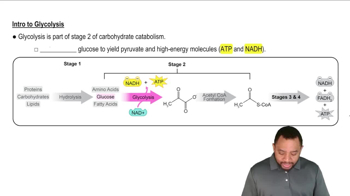
    A metabolic pathway converting glucose into pyruvate, generating ATP and NADH as energy carriers.
  • Carbohydrate Catabolism

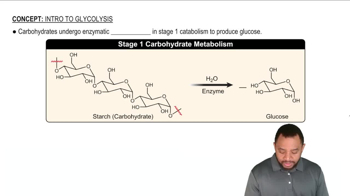
    A multi-stage process breaking down carbohydrates to release energy, beginning with hydrolysis.
  • Enzymatic Hydrolysis

    A reaction using water and enzymes to cleave bonds in polysaccharides, yielding monosaccharides.
  • Polysaccharide

    A large carbohydrate molecule composed of many glucose units linked together.
  • Glucose

    A monosaccharide produced from polysaccharide hydrolysis, serving as the main substrate for glycolysis.
  • Monosaccharide

    A simple sugar unit, such as glucose, resulting from the breakdown of complex carbohydrates.
  • Pyruvate

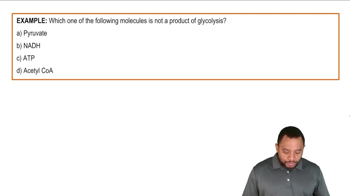
    The three-carbon end product of glycolysis, serving as a precursor for further energy-generating pathways.
  • ATP

    A high-energy molecule generated during glycolysis, essential for cellular energy transfer.
  • NADH

    A reduced coenzyme formed during glycolysis, carrying electrons for subsequent energy production.
  • NAD+

    An oxidizing coenzyme that accepts electrons during glucose oxidation, becoming NADH.
  • Acetyl CoA

    A molecule formed from pyruvate after glycolysis, entering later stages of cellular respiration.
  • Starch

    A common polysaccharide consisting of numerous glucose units, serving as an energy reserve.
  • FADH2

    A high-energy electron carrier produced in later stages of cellular respiration, not directly from glycolysis.