Back

Intro to Coenzymes definitions

Control buttons has been changed to "navigation" mode.
1/15
  • Coenzyme

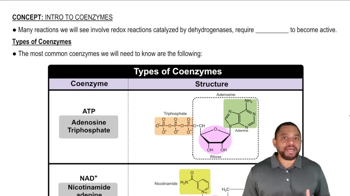
    Organic molecule required by enzymes for catalytic activity, often acting as carriers of electrons or functional groups.
  • Redox Reaction

    Chemical process involving electron transfer, commonly facilitated by dehydrogenases in metabolic pathways.
  • Dehydrogenase

    Enzyme class that catalyzes oxidation-reduction reactions, often requiring coenzymes for activity.
  • ATP

    Molecule with adenosine and three phosphates; stores and transfers energy via high-energy phosphate bonds.
  • Adenosine

    Component of ATP, NAD+, and FAD, consisting of adenine attached to a ribose sugar.
  • Phosphate Bond

    High-energy linkage between phosphate groups, crucial for energy storage and transfer in ATP.
  • NAD+

    Coenzyme with nicotinamide, adenine, and ribose units; central to electron transfer in oxidation-reduction reactions.
  • FAD

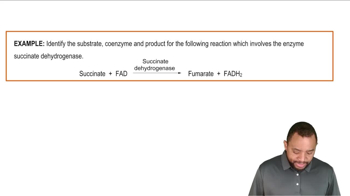
    Coenzyme containing flavin, ribotol, and ADP; participates in redox reactions within metabolic processes.
  • Coenzyme A

    Molecule with aminoethane thiol, pantothenic acid, and ADP; essential for acyl group transfer in metabolism.
  • ADP

    Common structural motif in coenzymes, composed of adenosine and two phosphates, serving as a building block.
  • Nicotinamide

    Nitrogen-containing ring structure in NAD+, involved in accepting and donating electrons during redox reactions.
  • Flavin

    Isoalloxazine ring system in FAD, responsible for reversible electron transfer in metabolic pathways.
  • Pantothenic Acid

    Vitamin-derived component of coenzyme A, crucial for linking the molecule to its functional thiol group.
  • Aminoethane Thiol

    Functional group in coenzyme A, providing a reactive sulfur atom for acyl group attachment.
  • Ribose

    Five-carbon sugar present in the backbone of ATP, NAD+, and FAD, connecting bases and phosphate groups.