Back

Energy Production in Biochemical Pathways definitions

Control buttons has been changed to "navigation" mode.
1/14
  • Oxidation Reaction

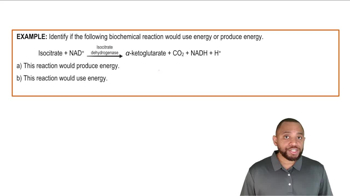
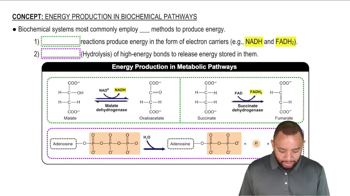
    Process where substrates lose electrons, often forming electron carriers like NADH or FADH2, crucial for cellular energy generation.
  • Cleavage Reaction

    Breaking of chemical bonds, such as phosphate bonds in ATP, to release stored energy for cellular processes.
  • Electron Carrier

    Molecule that temporarily holds electrons during metabolic reactions, facilitating energy transfer in cells.
  • NADH

    Reduced form of NAD+ that stores high-energy electrons, later used to drive ATP synthesis in metabolism.
  • FADH2

    Reduced form of FAD, generated during oxidation steps, that donates electrons to the electron transport chain.
  • Malate

    Intermediate in the citric acid cycle, oxidized to oxaloacetate, contributing to electron carrier formation.
  • Oxaloacetate

    Four-carbon molecule formed from malate, essential for continuing the citric acid cycle and energy production.
  • Succinate

    Citric acid cycle intermediate, oxidized to fumarate, facilitating FADH2 production.
  • Fumarate

    Product of succinate oxidation, featuring a new pi bond, and a step in cellular energy metabolism.
  • Dehydrogenase

    Enzyme class that catalyzes oxidation reactions by transferring hydrogen atoms to electron carriers.
  • Hydrolysis

    Chemical process involving water to break bonds, such as in ATP, releasing energy for cellular use.
  • Phosphate Bond

    High-energy linkage in molecules like ATP, whose cleavage releases energy necessary for cellular functions.
  • ATP

    Primary energy currency of the cell, releasing energy upon hydrolysis of its phosphate bonds.
  • Citric Acid Cycle

    Central metabolic pathway where substrates are oxidized, generating electron carriers for energy production.