Back

Coenzymes in Metabolism definitions

Control buttons has been changed to "navigation" mode.
1/15
  • Coenzyme

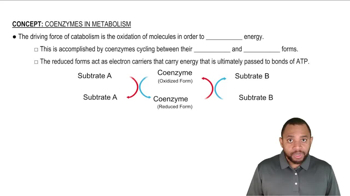
    Organic molecule that cycles between oxidized and reduced forms, transferring electrons and protons during metabolic reactions.
  • Catabolism

    Metabolic process involving the breakdown of molecules, releasing energy through oxidation reactions.
  • Oxidation

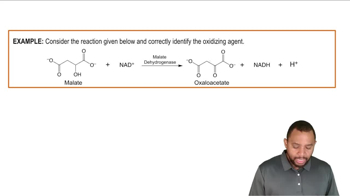
    Loss of hydrogen or electrons from a molecule, often resulting in energy release and substrate transformation.
  • Reduction

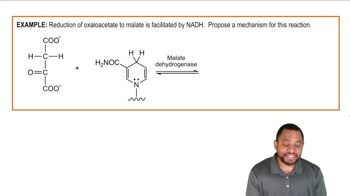
    Gain of hydrogen or electrons by a molecule, typically converting coenzymes to their energy-carrying forms.
  • Electron Carrier

    Molecule that temporarily holds electrons and protons, facilitating their transfer between substrates in metabolism.
  • Nicotinamide Adenine Dinucleotide

    Coenzyme with a nicotinamide group that accepts electrons and a hydride ion, cycling between oxidized and reduced states.
  • NAD+

    Oxidized form of a coenzyme that accepts two electrons and one proton, becoming its reduced, energy-rich counterpart.
  • NADH

    Reduced form of a coenzyme, carrying high-energy electrons and a hydride ion for ATP production.
  • Flavin Adenine Dinucleotide

    Coenzyme with a flavin group that accepts two electrons and two protons, participating in redox reactions.
  • FAD

    Oxidized form of a coenzyme that gains two hydrogens at nitrogen atoms, converting to its reduced form.
  • FADH2

    Reduced form of a coenzyme, containing two additional hydrogens, used in energy-generating pathways.
  • Coenzyme A

    Molecule composed of ADP, pantothenic acid, and a thiol group, responsible for carrying acetyl groups to the Krebs Cycle.
  • Thiol Group

    High-energy sulfur-hydrogen bond in a coenzyme, crucial for attaching and transferring acyl groups.
  • Pantothenic Acid

    Vitamin B5 component of a coenzyme, essential for forming the structure that carries acetyl groups.
  • Krebs Cycle

    Central metabolic pathway where acetyl groups are oxidized, leading to ATP production via coenzyme-mediated reactions.