Back

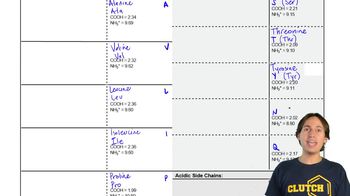
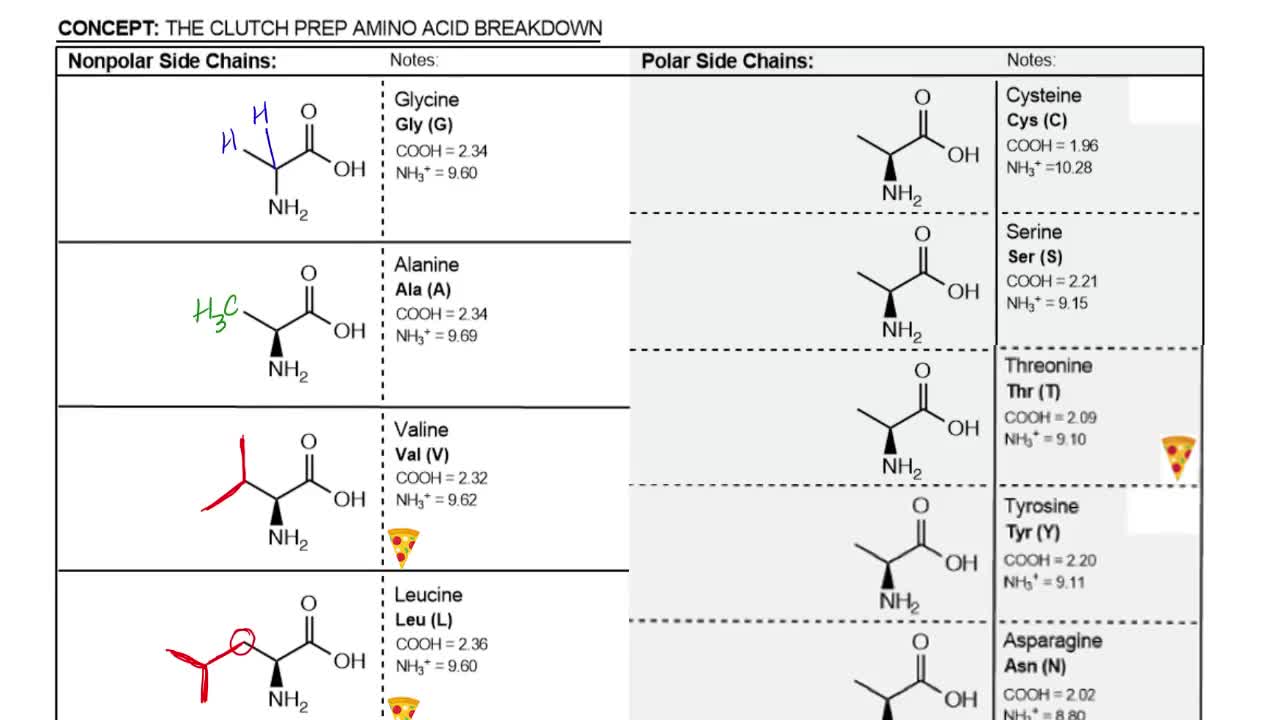
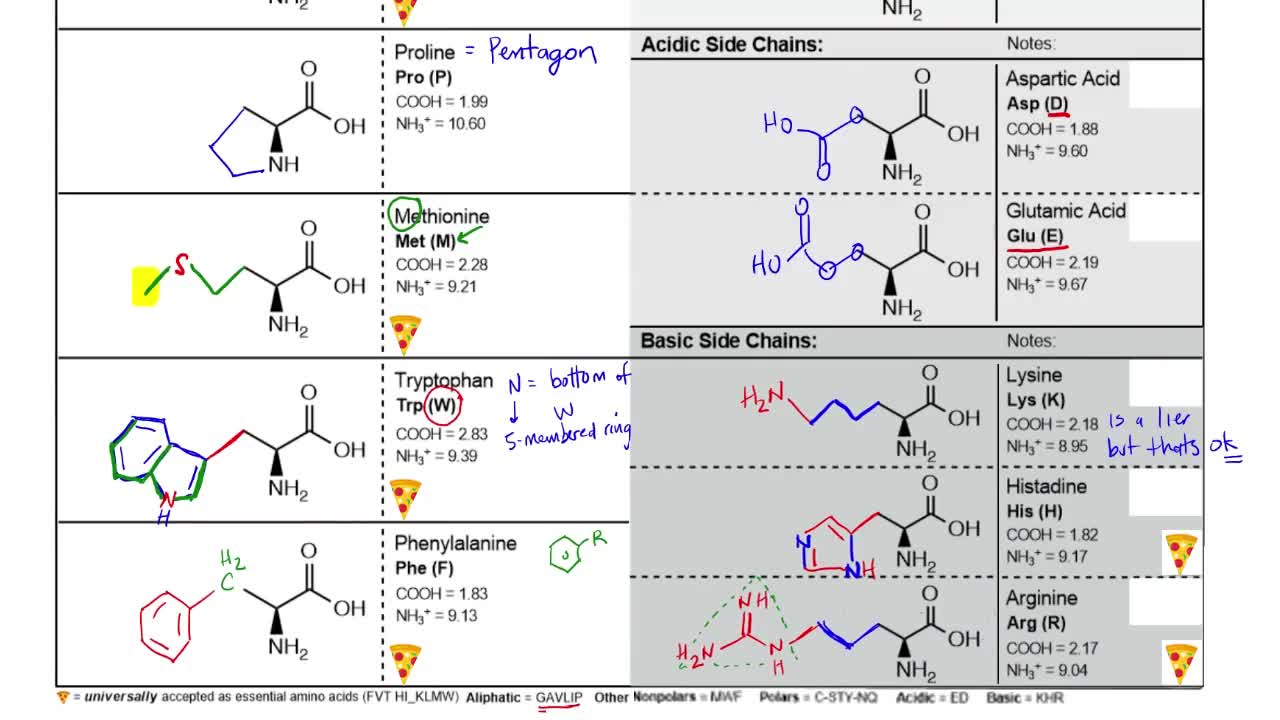
Amino Acid Chart definitions

Control buttons has been changed to "navigation" mode.
1/15
  • Amino Acid

    Organic molecule with a central carbon, amine group, carboxyl group, hydrogen, and unique side chain (R group).
  • Side Chain

    Variable group attached to the central carbon of an amino acid, determining its properties and classification.
  • Nonpolar Side Chain

    Hydrophobic group on an amino acid that avoids water, often found buried inside proteins.
  • Polar Side Chain

    Hydrophilic group on an amino acid that interacts favorably with water, often found on protein surfaces.
  • Hydrophobic

    Describes molecules or groups that repel water, tending to cluster away from aqueous environments.
  • Hydrophilic

    Describes molecules or groups that attract and interact well with water, often exposed on protein surfaces.
  • Essential Amino Acid

    Amino acid that cannot be synthesized by the body and must be obtained from dietary sources.
  • Aliphatic

    Describes non-aromatic, straight or branched hydrocarbon side chains in certain amino acids.
  • Aromatic

    Describes side chains containing a planar ring structure with delocalized electrons, such as benzene.
  • Sulfur-Containing Amino Acid

    Amino acid with a sulfur atom in its side chain, influencing reactivity and protein structure.
  • Benzene Ring

    Six-carbon aromatic ring found in the side chains of certain amino acids, contributing to hydrophobicity.
  • Carboxylic Acid

    Functional group with a carbon double-bonded to oxygen and single-bonded to hydroxyl, present in acidic amino acids.
  • Amide

    Functional group with a carbonyl bonded to a nitrogen, found in the side chains of asparagine and glutamine.
  • One-Letter Code

    Single-letter abbreviation assigned to each amino acid for concise representation in protein sequences.
  • Three-Letter Code

    Standardized three-letter abbreviation used to identify amino acids in scientific notation.