Back

Alcohol Nomenclature definitions

Control buttons has been changed to "navigation" mode.
1/13
  • Alcohol

    A molecule containing a hydroxyl group attached to a saturated carbon atom, prioritized in organic nomenclature.
  • Hydroxyl Group

    A functional group consisting of an oxygen and hydrogen atom, responsible for the properties of alcohols.
  • Glycol

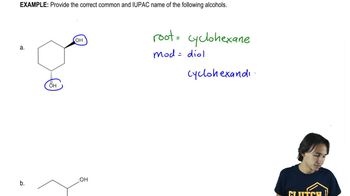
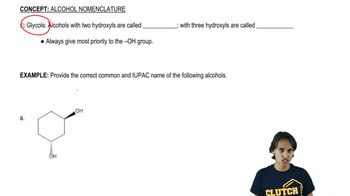
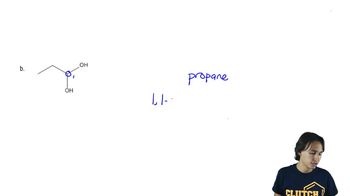
    A molecule with more than one hydroxyl group on its carbon chain, though considered an unspecific term.
  • Diol

    A compound featuring exactly two hydroxyl groups on its carbon chain, named using a specific prefix.
  • Triol

    A compound with three hydroxyl groups on its carbon chain, named using a numerical prefix.
  • Tetraol

    A molecule containing four hydroxyl groups, following the systematic prefix-based naming convention.
  • Functional Group

    A specific group of atoms within a molecule that imparts characteristic chemical behavior.
  • Priority

    The rule in nomenclature that determines which group receives the lowest possible number in the carbon chain.
  • Double Bond

    A type of chemical bond where two pairs of electrons are shared between two atoms, affecting nomenclature order.
  • Triple Bond

    A chemical bond involving three shared pairs of electrons, considered lower in naming priority than alcohols.
  • Alkyl Halide

    A compound where a halogen atom is bonded to an alkyl group, ranked below alcohols in naming priority.
  • Nomenclature

    The systematic method for naming organic compounds based on structure and functional groups.
  • Prefix

    A syllable or group of letters added to the start of a compound's name to indicate the number of specific groups.