- Download the worksheet to save time writing
- Start solving the practice problems
- If you're stuck, watch the video solutions
- See your summary to get more insights

A Russian chemist investigated the hydrolysis of an ester by a hydroxide ion and discovered that the alkyl C—O bond remains intact while the acyl C—O bond breaks.
a. Draw the product of the hydrolysis of the following ester.
b. What would be the product if the alkyl C—O bond had broken?

Draw a mechanism for the hydrolysis of 5-hydroxypentanoic acid lactone in the presence of a base.
Identify the correct reagents that can be used to carry out the following conversions.

Draw the products expected in the reaction given below.

5-hydroxy-3-methylpentanoic acid forms a cyclic ester (lactone) when it is mixed with a trace amount of acid.

(i) Write the structure of the lactone.
(ii) Suggest a plausible mechanism for its formation.
Show how to achieve each of the synthetic transformations shown below.

Determine the product of the reaction given below.

Will the compounds below undergo decarboxylation upon heating?
(i) 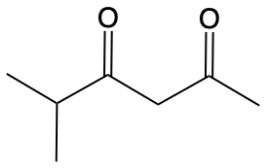
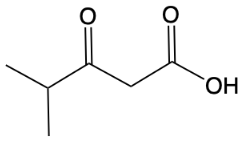
Which compound(s) below can undergo decarboxylation?
