- Download the worksheet to save time writing
- Start solving the practice problems
- If you're stuck, watch the video solutions
- See your summary to get more insights

Identify the major product of the reaction:
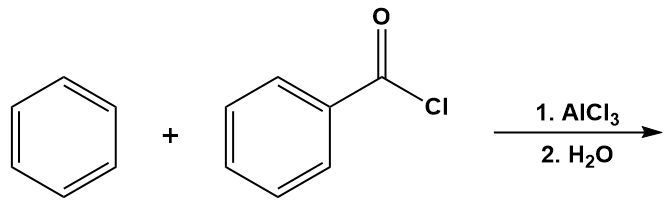
Write the mechanism for the reaction shown below.

What major product is expected from the reaction shown below?

Propose the synthesis that would produce (cyclohexylmethyl)benzene using the Friedel-Crafts acylation, Clemmensen reduction, or Gatterman-Koch reaction.
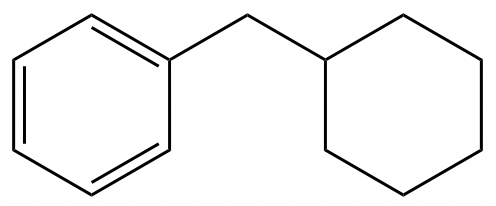
Write the correct synthetic sequence for preparation of the following compound using Friedel–Crafts acylation and/or Clemmensen reduction.
Friedel–Crafts alkylation suffers from overalkylation.
i. Identify the product of the reaction below considering overalkylation
ii. What makes it difficult to control and add only one alkyl group?

Propose the products formed by the light-induced reaction of the following compounds with (i) 1 equivalent of bromine and (ii) excess of bromine.
a. Toluene
b. 
Determine the product of the reaction between the given compound and H2CrO4 + Δ.

Give the product of the reaction given below:

What major product is expected from the reaction shown below?
