
The following reaction involves a starting material with a double bond and a hydroxy group, yet its mechanism resembles a pinacol rearrangement. Propose a mechanism, and point out the part of your mechanism that resembles a pinacol rearrangement.
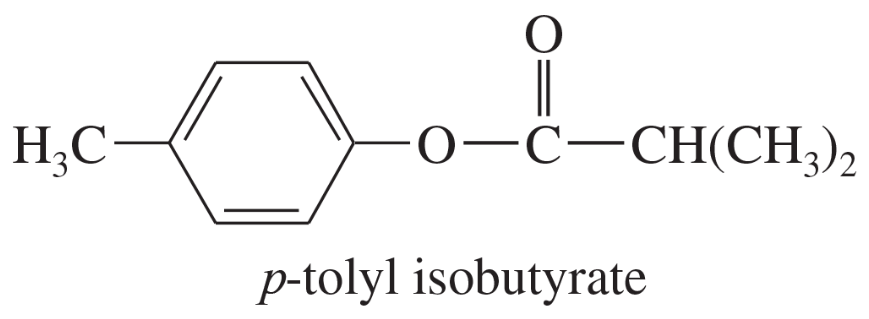
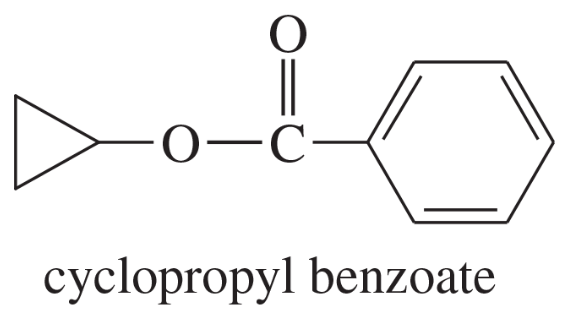
Show the alcohol and the acid chloride that combine to make the following esters.
(c) 
(d) 
Verified step by step guidance
Verified video answer for a similar problem:
Key Concepts
Esters Formation
Alcohols
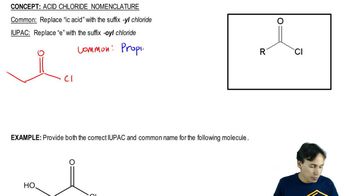
Acid Chlorides
Use resonance forms of the conjugate bases to explain why methanesulfonic acid (CH3SO3H, pKa = –2.6) is a much stronger acid than acetic acid (CH3COOH, pKa = 4.8).
A good Williamson synthesis of ethyl methyl ether would be
What is wrong with the following proposed synthesis of ethyl methyl ether? First, ethanol is treated with acid to protonate the hydroxy group (making it a good leaving group), and then sodium methoxide is added to displace water.
(a) Show how ethanol and cyclohexanol may be used to synthesize cyclohexyl ethyl ether (tosylation followed by the Williamson ether synthesis).
(b) Why can't we synthesize this product simply by mixing the two alcohols, adding some sulfuric acid, and heating?
Predict the products formed by periodic acid cleavage of the following diols.
(a) CH3CH(OH)CH(OH)CH3
(b)
Predict the products formed by periodic acid cleavage of the following diols.
(c)
(d)
