
Textbook Question
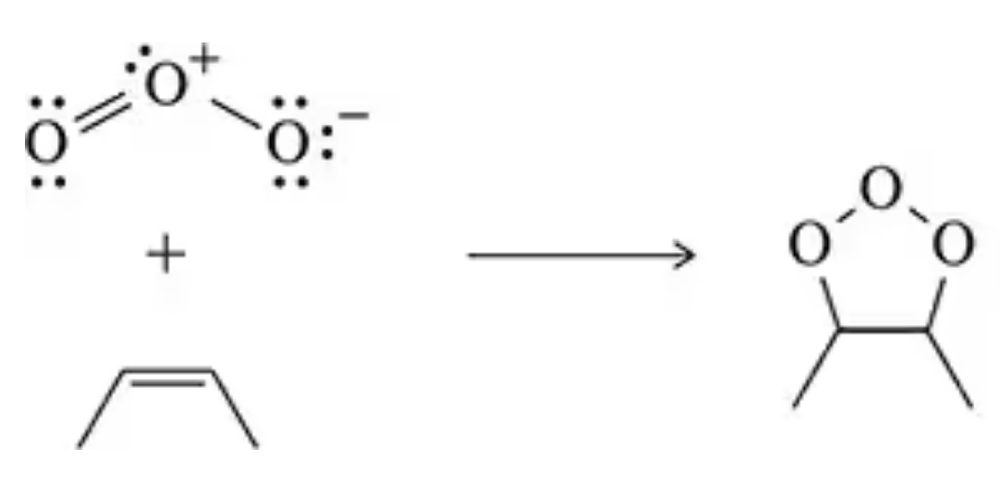
We have studied a number of pericyclic reactions previously. Draw the mechanism of the steps shown. The section number where this material was first studied is given for your review.
(c)
1
views

 Verified step by step guidance
 07:37
07:37
 04:02
04:02 06:30
06:30We have studied a number of pericyclic reactions previously. Draw the mechanism of the steps shown. The section number where this material was first studied is given for your review.
(c)
We have studied a number of pericyclic reactions previously. Draw the mechanism of the steps shown. The section number where this material was first studied is given for your review.
(a)
Diene A participates in a fast and efficient Diels–Alder reaction with maleic anhydride, the powerful dienophile from Assessment 22.9. However, the related diene B does not undergo a Diels–Alder reaction. Why?
What frequency of light would be required to excite an electron if the HOMO–LUMO energy gap was 33.9 kcal/mol (142 kJ/mol)?
We have studied a number of pericyclic reactions previously. Draw the mechanism of the steps shown. The section number where this material was first studied is given for your review.
(d)
The SN2 reaction is the concerted, backside displacement of a good leaving group by a nucleophile. Why do nucleophiles attack from the back in SN2 reactions?