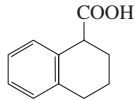
Design a synthesis for each of the following, using an intramolecular reaction: d.
Verified step by step guidance
1
Identify the target molecule and determine the functional groups present. For an intramolecular reaction, look for a situation where a single molecule can form a ring structure through a reaction between two functional groups within the same molecule.
Determine the starting material that contains the necessary functional groups in the correct positions to facilitate the intramolecular reaction. For example, if the target molecule is a cyclic ether, you might need a molecule with both a hydroxyl group (-OH) and a leaving group (e.g., halide) appropriately positioned.
Choose the appropriate reaction type to form the desired ring. Common intramolecular reactions include intramolecular nucleophilic substitution (to form ethers or amines) or intramolecular aldol condensation (to form cyclic ketones or alcohols).
Plan the synthetic steps to prepare the starting material. This may involve functional group interconversions, such as converting an alcohol to a halide or introducing a carbonyl group through oxidation.
Propose the reaction conditions for the intramolecular reaction. For example, if forming a cyclic ether, you might use a strong base (e.g., NaH) to deprotonate the hydroxyl group, followed by heating to promote the intramolecular substitution reaction.
Verified video answer for a similar problem:
This video solution was recommended by our tutors as helpful for the problem above
Play a video:
0 Comments
Key Concepts
Here are the essential concepts you must grasp in order to answer the question correctly.
Intramolecular Reactions
Intramolecular reactions occur when a reaction takes place within a single molecule, allowing functional groups to react with each other. This often leads to the formation of cyclic structures or new functional groups. Understanding these reactions is crucial for designing syntheses, as they can significantly enhance the efficiency and selectivity of the process.
Synthesis design involves planning a series of chemical reactions to construct a specific compound from simpler starting materials. This requires knowledge of reaction mechanisms, functional group transformations, and the ability to predict the outcomes of reactions. A well-designed synthesis minimizes steps and maximizes yield, making it essential for efficient organic chemistry.
Synthesis of Amino Acids: Strecker Synthesis Example 1
Reaction Mechanisms
Reaction mechanisms describe the step-by-step process by which reactants transform into products, detailing the breaking and forming of bonds. Understanding mechanisms is vital for predicting the feasibility and outcome of intramolecular reactions, as they can influence the stability of intermediates and the overall reaction pathway. This knowledge aids in the strategic design of synthetic routes.

 Verified step by step guidance
 2:29
2:29