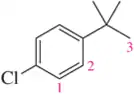
For the molecules in Assessment 15.58, give an approximate chemical shift for each indicated carbon. [The range of correct answers is large here.]. (a)
Verified step by step guidance
1
Identify the type of carbon environment in the molecule. Consider factors such as hybridization (sp3, sp2, sp), the presence of electronegative atoms, and the degree of substitution.
Understand that chemical shift values in 13C NMR are influenced by the electronic environment around the carbon atom. Electronegative atoms or groups can deshield the carbon, leading to higher chemical shift values.
Consider the typical chemical shift ranges for different types of carbon environments: sp3 hybridized carbons generally appear between 0-50 ppm, sp2 hybridized carbons between 100-150 ppm, and sp hybridized carbons around 70-90 ppm.
Evaluate the effect of nearby functional groups or atoms. For example, carbons adjacent to oxygen or nitrogen atoms may experience a shift towards higher ppm values due to deshielding effects.
Estimate the chemical shift for each indicated carbon based on the identified factors and typical ranges. Remember that the range of correct answers is large, so focus on understanding the trends and influences rather than pinpointing an exact value.
Verified video answer for a similar problem:
This video solution was recommended by our tutors as helpful for the problem above
Play a video:
0 Comments
Key Concepts
Here are the essential concepts you must grasp in order to answer the question correctly.
Chemical Shift in NMR Spectroscopy
Chemical shift is a key concept in NMR spectroscopy that refers to the resonant frequency of a nucleus relative to a standard in a magnetic field. It provides information about the electronic environment surrounding a nucleus, typically measured in parts per million (ppm). Factors such as electronegativity of nearby atoms and hybridization state can influence the chemical shift, making it a useful tool for identifying functional groups and molecular structure.
The chemical shift of carbon atoms in NMR is influenced by several factors, including the electronegativity of adjacent atoms, the hybridization of the carbon atom, and the presence of electron-withdrawing or electron-donating groups. For example, carbons bonded to electronegative atoms like oxygen or nitrogen typically show downfield shifts (higher ppm values), while those in alkyl groups are usually upfield (lower ppm values).
Interpreting NMR spectra involves analyzing the chemical shifts, signal splitting, and integration to deduce the structure of a molecule. Each unique carbon environment in a molecule will produce a distinct signal in the carbon-13 NMR spectrum. By comparing the observed chemical shifts to known reference values, one can infer the types of carbon environments present and piece together the molecular structure.