Ch. 6 - The Reactions of Alkenes • The Stereochemistry of Addition Reactions
Bruice - Organic Chemistry 8th Edition
Bruice8th EditionOrganic ChemistryISBN: 9780135213711Not the one you use?Change textbook
Chapter 7, Problem 27a,b

Draw structures for the following:
a. 2-propyloxirane
b. cyclohexene oxide

Verified step by step guidance
1
Step 1: Understand the structure of an oxirane. An oxirane is a three-membered cyclic ether, also known as an epoxide. It contains an oxygen atom bonded to two adjacent carbon atoms, forming a strained ring.
Step 2: For 2-propyloxirane, identify the substituents. The '2-propyl' group indicates a propyl chain (CH₃-CH₂-CH₂-) attached to the second carbon of the oxirane ring. Draw the oxirane ring first, then attach the propyl group to the second carbon.
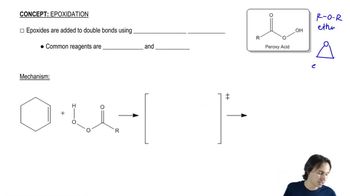
Step 3: For cyclohexene oxide, start with the structure of cyclohexene. Cyclohexene is a six-membered ring with one double bond. To form the oxide, the double bond reacts to create an epoxide ring, where the oxygen atom bridges the two carbons that were originally part of the double bond.
Step 4: Ensure proper stereochemistry. For both structures, consider whether stereochemistry is relevant. For example, in 2-propyloxirane, the propyl group and the oxygen atom may have specific spatial orientations (cis or trans). Similarly, cyclohexene oxide can have stereoisomers depending on the orientation of the epoxide ring.
Step 5: Verify the structures. Double-check that the number of bonds around each atom is correct (carbon should have four bonds, oxygen should have two), and ensure that the substituents are placed correctly according to the IUPAC naming rules.

Verified video answer for a similar problem:

This video solution was recommended by our tutors as helpful for the problem above.
Was this helpful?

Key Concepts

Here are the essential concepts you must grasp in order to answer the question correctly.

Epoxides

Epoxides are a class of cyclic ethers characterized by a three-membered ring structure containing an oxygen atom. This unique structure makes them highly reactive intermediates in organic chemistry, often participating in nucleophilic ring-opening reactions. Understanding the properties and reactivity of epoxides is essential for drawing their structures accurately.
Recommended video:
Guided course
02:19
General properties of epoxidation.

Alkene Reactivity

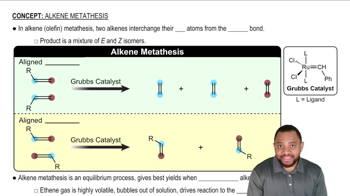
Alkenes are hydrocarbons that contain at least one carbon-carbon double bond, which makes them more reactive than alkanes. The double bond can undergo various reactions, including epoxidation, where an alkene reacts with an oxidizing agent to form an epoxide. Recognizing how alkenes can be transformed into epoxides is crucial for understanding the structures requested in the question.
Recommended video:
2:09
Alkene Metathesis Concept 1

Stereochemistry

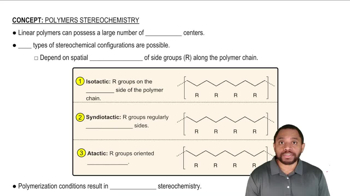
Stereochemistry involves the study of the spatial arrangement of atoms in molecules and how this affects their chemical behavior. In the case of epoxides, the stereochemistry can influence the reactivity and the products formed during subsequent reactions. Being aware of stereochemical considerations is important when drawing and interpreting the structures of compounds like 2-propyloxirane and cyclohexene oxide.
Recommended video:
1:38
Polymer Stereochemistry Concept 1