Ch. 21 - Conjugated Systems I: Stability and Addition Reactions
Mullins - Organic Chemistry: A Learner Centered Approach 1st Edition
Mullins1st EditionOrganic Chemistry: A Learner Centered ApproachISBN: 9780137566471Not the one you use?Change textbook
Chapter 20, Problem 48

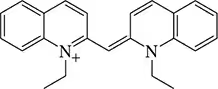
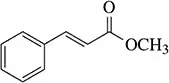
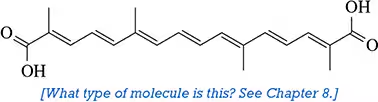
Would you expect the following molecules to absorb in the UV–visible region of the electromagnetic spectrum?
(a) Chemical structure of a conjugated system with two nitrogen atoms, each bonded to a benzene ring and an ethyl group.
(b) Cyclohexenone structure with a double bond and a carbonyl group.
(c) Chemical structure of methyl cinnamate, featuring a benzene ring, a carbonyl group, and an ester linkage.
(d) Chemical structure of a bicyclic compound with an oxygen atom and a double bond in one ring, and a single bond extending outward.
(e) Chemical structure of a conjugated molecule with alternating double bonds and hydroxyl groups.

Verified step by step guidance
1
Understand that UV-visible absorption is related to the presence of conjugated systems in a molecule. Conjugated systems involve alternating single and multiple bonds, which allow for delocalization of π-electrons.
Examine each molecule to identify the presence of conjugated systems. Look for alternating single and double bonds, or aromatic rings, which are common indicators of conjugation.
Consider the length of the conjugated system. Generally, the longer the conjugated system, the lower the energy required for electronic transitions, and the more likely the molecule will absorb in the UV-visible region.
Evaluate the presence of functional groups that can affect UV-visible absorption. Groups such as carbonyls, nitro groups, or amines can shift absorption wavelengths due to their electronic effects.
For each molecule, determine if the structure includes features that typically result in UV-visible absorption, such as extended conjugation or specific functional groups. If these features are present, the molecule is likely to absorb in the UV-visible region.

Verified video answer for a similar problem:

This video solution was recommended by our tutors as helpful for the problem above.
Was this helpful?

Key Concepts

Here are the essential concepts you must grasp in order to answer the question correctly.

Conjugation

Conjugation refers to the overlap of p-orbitals across adjacent single and multiple bonds, allowing for delocalization of electrons. This delocalization lowers the energy gap between the ground and excited states, enabling absorption in the UV-visible region. Molecules with extended conjugation typically absorb at longer wavelengths, making them more likely to be visible in the UV-visible spectrum.
Recommended video:
Guided course
03:27
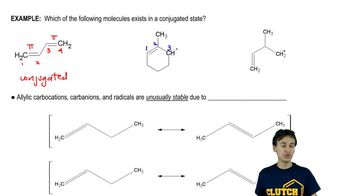
Conjugated states

Chromophores

Chromophores are parts of a molecule responsible for its color, typically due to the presence of conjugated pi-bond systems. These groups absorb specific wavelengths of light, leading to electronic transitions. The presence of chromophores in a molecule is a key factor in determining whether it will absorb in the UV-visible region, as they are directly involved in the absorption process.

Electronic Transitions

Electronic transitions occur when electrons in a molecule absorb energy and move from a lower energy level (ground state) to a higher energy level (excited state). In the context of UV-visible spectroscopy, these transitions often involve pi to pi* or n to pi* transitions. The likelihood and wavelength of absorption depend on the energy difference between these states, which is influenced by the molecular structure and presence of conjugated systems.
Recommended video:
Guided course
04:56
Electron Configurations of Transition Metals