Draw the condensed structure of a compound that contains only carbon and hydrogen atoms and that has a. three sp3 hybridized carbons. b. one sp3 hybridized carbon and two sp2 hybridized carbons. c. two sp3 hybridized carbons and two sp hybridized carbons.
Verified step by step guidance
1
Step 1: Understand the hybridization of carbon atoms. Carbon atoms can be sp3, sp2, or sp hybridized depending on the number of sigma bonds and lone pairs around them. sp3 hybridized carbons form four sigma bonds, sp2 hybridized carbons form three sigma bonds and one pi bond, and sp hybridized carbons form two sigma bonds and two pi bonds.
Step 2: For part (a), identify a structure with three sp3 hybridized carbons. Each sp3 hybridized carbon must form four sigma bonds. A simple example is propane (C3H8), where all three carbons are sp3 hybridized. Draw the condensed structure by connecting the carbons with single bonds and adding enough hydrogens to satisfy the valency of each carbon.
Step 3: For part (b), identify a structure with one sp3 hybridized carbon and two sp2 hybridized carbons. The sp2 hybridized carbons must form a double bond between them, while the sp3 hybridized carbon forms single bonds. A simple example is propene (C3H6). Draw the condensed structure by placing a double bond between two carbons and adding hydrogens to satisfy the valency.
Step 4: For part (c), identify a structure with two sp3 hybridized carbons and two sp hybridized carbons. The sp hybridized carbons must form a triple bond between them, while the sp3 hybridized carbons form single bonds. A simple example is butyne (C4H6). Draw the condensed structure by placing a triple bond between two carbons and connecting the sp3 hybridized carbons with single bonds, adding hydrogens to satisfy the valency.
Step 5: Verify each structure by ensuring that the total number of bonds around each carbon matches its hybridization state and that the molecular formula matches the description provided in the problem.
Verified video answer for a similar problem:
This video solution was recommended by our tutors as helpful for the problem above
Video duration:
6m
Play a video:
0 Comments
Key Concepts
Here are the essential concepts you must grasp in order to answer the question correctly.
Hybridization
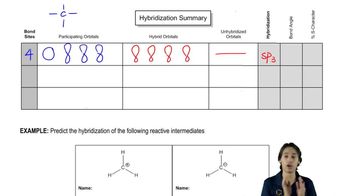
Hybridization is the concept of mixing atomic orbitals to form new hybrid orbitals that can accommodate the bonding requirements of carbon atoms. In organic chemistry, sp3, sp2, and sp hybridizations correspond to different types of bonding: sp3 involves single bonds, sp2 involves one double bond, and sp involves triple bonds. Understanding hybridization is crucial for predicting the geometry and reactivity of organic compounds.
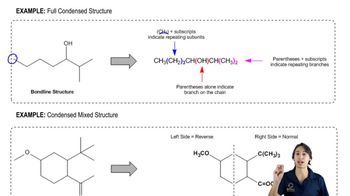
A condensed structural formula is a way of representing a chemical compound that shows the arrangement of atoms without depicting all the bonds explicitly. It provides a simplified view of the molecule, indicating how atoms are connected. This format is particularly useful for visualizing the structure of organic compounds with multiple carbon atoms and functional groups.
Alkanes, alkenes, and alkynes are classes of hydrocarbons characterized by their bonding types. Alkanes contain only single bonds (sp3), alkenes have at least one double bond (sp2), and alkynes have at least one triple bond (sp). Recognizing these structures is essential for drawing the correct condensed structures based on the specified hybridization of carbon atoms in the question.

 6:53 minutes
 Verified step by step guidance
 10:43
10:43