Skip to main content
Nutrition
My Course
Learn
Exam Prep
AI Tutor
Study Guides
Flashcards
Try the app
My Course
Learn
Exam Prep
AI Tutor
Study Guides
Flashcards
Try the app
Back
U.S. Food Safety Systems definitions
You can tap to flip the card.
Environmental Protection Agency
You can tap to flip the card.
👆
Environmental Protection Agency
Federal agency responsible for setting pesticide residue limits and water quality standards at the farm or food origin level.
Track progress
Control buttons has been changed to "navigation" mode.
1/15
Related flashcards
Related practice
Recommended videos
U.S. Food Safety Systems quiz
U.S. Food Safety Systems
15 Terms
U.S. Food Safety Systems
12. Food Safety & Regulation
10 problems
Topic
Natural, Organic, & Bioengineered Foods
12. Food Safety & Regulation
10 problems
Topic
12. Food Safety & Regulation
6 topics
15 problems
Chapter
05:36
Food Product Dating
04:13
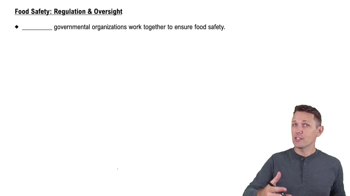
Food Safety: Regulation & Oversight
01:52
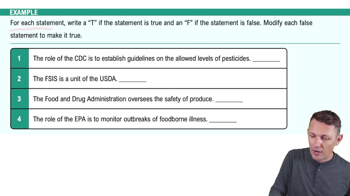
U.S. Food Safety Systems Example 1
Terms in this set (15)
Hide definitions
Environmental Protection Agency
Federal agency responsible for setting pesticide residue limits and water quality standards at the farm or food origin level.
United States Department of Agriculture
Federal department overseeing food safety, especially through its Food Safety and Inspection Service for meat, poultry, and eggs.
Food Safety and Inspection Service
Branch of the USDA that inspects and regulates meat, poultry, and eggs, ensuring compliance with pesticide residue limits.
Food and Drug Administration
Federal agency enforcing pesticide limits and monitoring safety for most foods from production to retail, excluding meat, poultry, and eggs.
Centers for Disease Control
Federal agency monitoring and investigating foodborne illness outbreaks and educating the public on food safety.
Pesticide Residue Limit
Maximum amount of pesticide allowed to remain on food, set to ensure consumer safety and regulated by federal agencies.
Water Quality Standard
Regulation defining acceptable levels of contaminants in water used at the farm level to protect food safety.
Food Product Dating Label
Printed date on food packaging, such as sell by, best by, or expiration, indicating freshness or quality but not guaranteeing safety.
Sell By Date
Date by which a store should remove a product from shelves; food is often still safe for consumption after this date.
Best By Date
Date indicating when a food is at its highest quality or flavor; food is typically still safe after this date.
Expiration Date
Last recommended day for consuming a food product, especially important for safety in certain items like baby formula.
Use By Date
Final date recommended for use of a product for best quality and, in some cases, safety; strictly followed for baby formula.
Foodborne Illness
Disease resulting from consuming contaminated food, monitored and investigated by federal health agencies.
Food Spoilage
Physical or sensory changes in food, such as odor, texture, or color, indicating reduced quality or potential safety risk.
Baby Formula
Infant nutrition product requiring strict adherence to use by dates due to the importance of maintaining nutritional quality.
 BackBack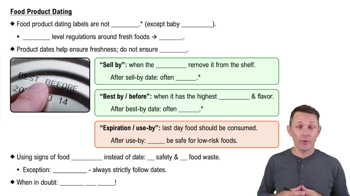
 05:36
05:36