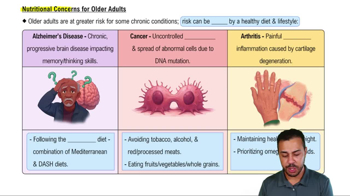
A chronic, progressive brain disorder marked by memory loss and impaired thinking, with risk reduced by specific dietary patterns supporting brain health.
MIND diet
A dietary pattern combining Mediterranean and DASH diets, designed to support cognitive function and lower risk of neurodegenerative decline.
Carcinogen
A substance that increases the likelihood of cancer development, commonly found in tobacco, alcohol, and certain processed meats.
Arthritis
A condition characterized by painful joint inflammation due to cartilage breakdown, with symptoms eased by healthy weight and omega-3 intake.
Omega-3 fatty acids
Nutrients with anti-inflammatory properties that help reduce joint pain and support overall health in older adults.
Osteoporosis
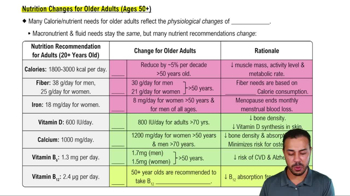
A bone disorder marked by decreased density and increased fracture risk, often prevented by adequate calcium and vitamin D intake.
Vitamin D
A nutrient essential for bone health, with increased needs in older adults due to reduced skin synthesis and absorption.
Calcium
A mineral vital for maintaining bone strength, with higher requirements in older adults to counteract age-related bone loss.
Vitamin B6
A vitamin that helps lower risks of cardiovascular disease and cognitive decline, with increased needs in older adults.
Vitamin B12
A nutrient with unchanged recommended intake in older adults, but often supplemented due to decreased absorption from food with age.
Food insecurity
A state of unreliable access to adequate, nutritious food, influenced by income, physical ability, and social factors in older adults.
Meals on Wheels
A service delivering nutritious meals to homebound older adults, addressing dietary needs but offering limited social interaction.
Congregate meals
Community-based meal programs for older adults, providing both nutrition and opportunities for social engagement.
Metabolic rate
The rate at which the body expends energy, which decreases with age, leading to lower calorie requirements in older adults.
Menopause
A life stage in women marked by the end of menstruation, resulting in reduced iron needs due to cessation of monthly blood loss.
 Back
Back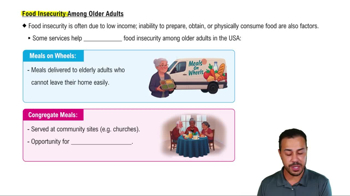
 01:05
01:05