What is the primary cause of acne according to the regulation of hunger, satiety, and hormones?
Acne is primarily caused by hormones.
Which macronutrient is considered the most effective at promoting satiety?
Protein is considered the most satiating macronutrient.
How do protein and fiber contribute to the feeling of fullness after eating?
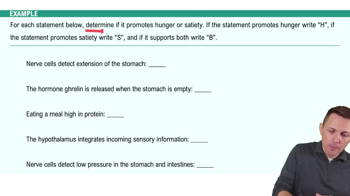
Protein promotes satiety by making you feel full faster compared to fat or carbohydrates, and fiber increases fullness by adding bulk that cannot be digested, physically filling the stomach.
What is the difference between hunger and appetite as described in the lesson?
Hunger is a physiological drive to eat, while appetite is the desire to eat food often triggered by external cues like sights and smells. They can occur independently of each other.
Which part of the brain integrates signals related to hunger and satiety?
The hypothalamus integrates signals from hormones, nerve cells, and nutrient intake to regulate hunger and satiety. It contains both a feeding center and a satiety center.
How do nerve cells in the digestive system contribute to the regulation of hunger?
Nerve cells detect pressure in the stomach and small intestine, relaying information about fullness or emptiness to the brain. These signals help the brain determine whether to stimulate hunger or satiety.
What is the role of cholecystokinin (CCK) in digestion and satiety?
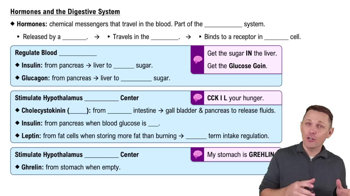
CCK is released from the small intestine when food enters, signaling the brain to promote satiety. It also stimulates the gallbladder and pancreas to release digestive fluids.
How does glucagon affect blood glucose levels and what triggers its release?
Glucagon is released by the pancreas when blood glucose levels are low. It signals the liver to release stored glucose, raising blood glucose levels.
What is the function of leptin in energy regulation and hunger?
Leptin is released from fat cells when they are storing more fat than they are burning. It signals the brain to reduce hunger, helping regulate long-term energy balance.
Which hormone is primarily responsible for stimulating hunger and where is it produced?
Ghrelin is the main hormone that stimulates hunger and is produced in the stomach. It is released when the stomach is empty to signal the brain to initiate eating.
 Back
Back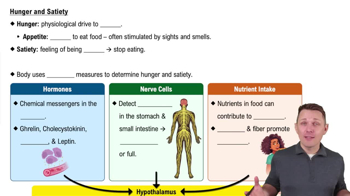
 05:40
05:40