How many calories are stored in one pound of body fat?
One pound of body fat contains approximately 3,500 calories.
What is the commonly cited calorie equivalent for one pound of fat in the context of energy balance and weight management?
The commonly cited calorie equivalent for one pound of fat is about 3,500 calories.
What factors determine an individual's healthy weight?
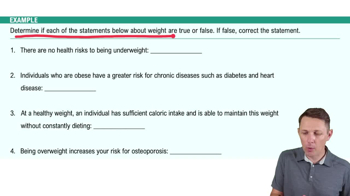
Healthy weight is determined by age, height, sex, and individual body size. These factors influence the number of calories needed to maintain a healthy weight.
Why is maintaining a healthy weight without constant dieting important?
Constant dieting can lead to unhealthy choices and make it difficult to sustain a healthy weight. Achieving healthy weight through lifestyle changes and proper nutrition is preferable.
What chronic diseases are associated with being overweight?
Being overweight increases the risk of type 2 diabetes, heart disease, hypertension, and some cancers. The risk rises as weight increases further above the healthy range.
How does obesity differ from being overweight in terms of health risks?
Obesity represents a higher degree of excess calorie intake than overweight and is linked to a very high risk of chronic diseases. It also increases the risk of mortality.
What are some health consequences of being underweight?
Being underweight can impair body functions and increase the risk of nutritional deficiencies. It is also associated with osteoporosis, compromised immune function, and increased risk of death if severe.
How does the risk of chronic disease change as you move away from a healthy weight?
The risk of chronic disease increases as you move further away from a healthy weight, either by gaining or losing too much weight. The further from the healthy range, the greater the risk.
Why is it important to consider weight categories as ranges rather than strict cutoffs?
Weight categories are ranges because risk increases gradually, not abruptly, as you move away from healthy weight. This approach recognizes individual variation in disease risk.
What is the relationship between energy balance and healthy weight maintenance?
Energy balance involves consuming enough calories for your body size without excess or deficiency. Maintaining this balance helps achieve and sustain a healthy weight.
 Back
Back
 05:02
05:02