Skip to main content
Microeconomics
My Course
Learn
Exam Prep
AI Tutor
Study Guides
Flashcards
Explore
Try the app
My Course
Learn
Exam Prep
AI Tutor
Study Guides
Flashcards
Explore
Try the app
Back
Unemployment: Minimum Wage Laws and Efficiency Wages quiz
You can tap to flip the card.
What is a price floor in the context of the labor market?
You can tap to flip the card.
👆
What is a price floor in the context of the labor market?
A price floor is a legally determined minimum price for labor, such as a minimum wage, set above the equilibrium wage.
Track progress
Control buttons has been changed to "navigation" mode.
1/15
Related flashcards
Recommended videos
Unemployment: Minimum Wage Laws and Efficiency Wages definitions
Unemployment: Minimum Wage Laws and Efficiency Wages
15 Terms
Guided course
02:18
Unemployment: Efficiency Wages
Guided course
04:58
Unemployment: Minimum Wage Laws
1
views
Terms in this set (15)
Hide definitions
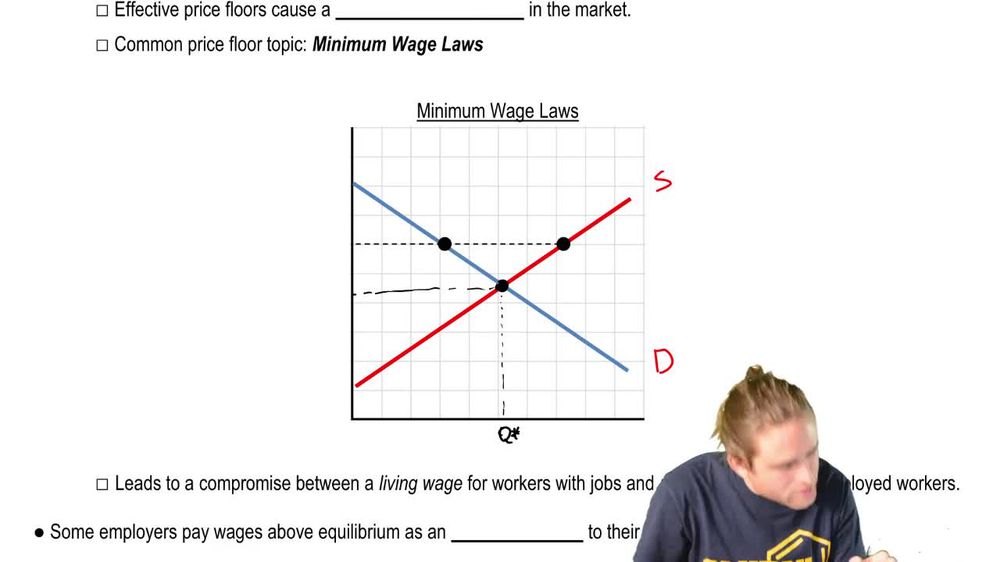
What is a price floor in the context of the labor market?
A price floor is a legally determined minimum price for labor, such as a minimum wage, set above the equilibrium wage.
What happens to the quantity of labor demanded when a minimum wage is set above the equilibrium wage?
The quantity of labor demanded decreases because firms want to hire fewer workers at the higher wage.
How does a minimum wage above equilibrium affect the quantity of labor supplied?
The quantity of labor supplied increases because more people want jobs at the higher wage.
What is the result of having a higher quantity of labor supplied than demanded due to minimum wage laws?
It creates a surplus of labor, meaning there are more job seekers than available jobs, leading to unemployment.
Why is a minimum wage set below the equilibrium wage ineffective?
Because the market already pays above the minimum, so it does not affect wages or employment.
What is the main trade-off created by minimum wage laws?
They provide a living wage for those employed but increase unemployment for those who cannot find jobs.
What is an efficiency wage?
An efficiency wage is a wage paid above the equilibrium level to incentivize workers and increase their productivity.
How do efficiency wages affect worker turnover?
Efficiency wages decrease worker turnover because employees are less likely to leave higher-paying jobs.
Why do efficiency wages attract higher-quality workers?
Higher wages attract more applicants, allowing employers to select the best candidates for the job.
How do efficiency wages influence worker effort?
Workers are motivated to work harder to avoid losing their higher-paying jobs.
What is the opportunity cost for a worker losing a job with an efficiency wage?
The opportunity cost is higher because the worker would likely have to accept a lower-paying job elsewhere.
How do minimum wage laws and efficiency wages both affect unemployment?
Both can increase unemployment by setting wages above equilibrium, but efficiency wages aim to boost productivity.
Who benefits from minimum wage laws?
Workers who keep their jobs benefit from higher wages, but others may become unemployed.
What role do incentives play in efficiency wage theory?
Incentives from higher wages encourage workers to stay, work harder, and improve productivity.
Why might a firm choose to pay efficiency wages despite higher labor costs?
Firms may pay efficiency wages to reduce turnover, attract better workers, and increase overall efficiency.
 BackBack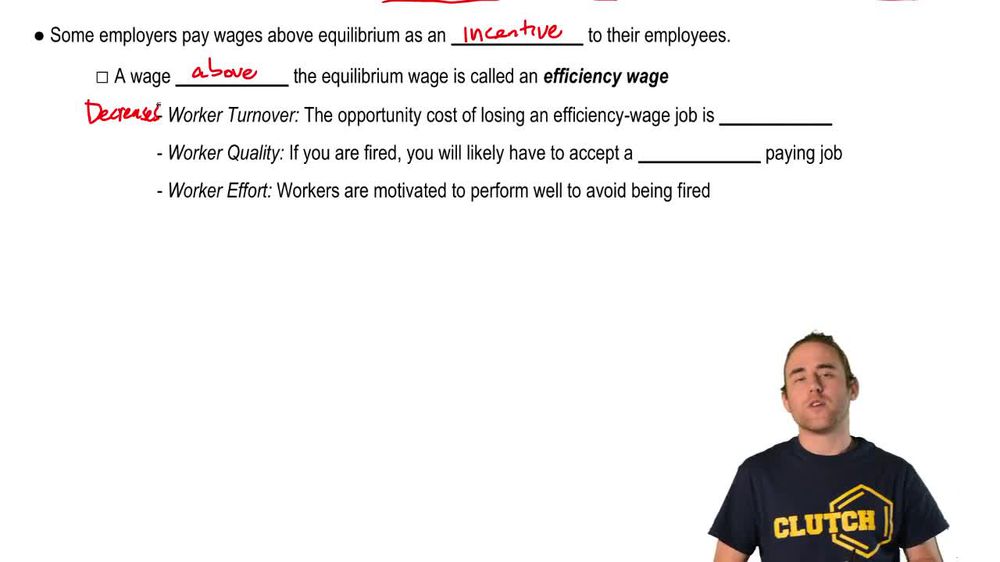
 02:18
02:18