Skip to main content
Microeconomics
My Course
Learn
Exam Prep
AI Tutor
Study Guides
Flashcards
Explore
Try the app
My Course
Learn
Exam Prep
AI Tutor
Study Guides
Flashcards
Explore
Try the app
Back
The Production Function and Marginal Revenue Product definitions
You can tap to flip the card.
Factors of Production
You can tap to flip the card.
👆
Factors of Production
Resources required for creating goods and services, including land, labor, capital, human capital, and entrepreneurship.
Track progress
Control buttons has been changed to "navigation" mode.
1/15
Related flashcards
Related practice
Recommended videos
The Production Function and Marginal Revenue Product quiz #1
The Production Function and Marginal Revenue Product
12 Terms
The Production Function and Marginal Revenue Product
15. Markets for the Factors of Production
10 problems
Topic
Demand for Labor in Perfect Competition
15. Markets for the Factors of Production
10 problems
Topic
15. Markets for the Factors of Production
10 topics
13 problems
Chapter
Guided course
02:41
The Factors of Production
7
views
Guided course
10:37
Marginal Revenue Product
2
views
Guided course
02:47
Marginal Revenue Product (Value of the Marginal Product of Labor)
5
views
1
rank
Terms in this set (15)
Hide definitions
Factors of Production
Resources required for creating goods and services, including land, labor, capital, human capital, and entrepreneurship.
Land
Natural resources such as forests and oil deposits, not limited to physical ground, used in production.
Labor
Physical and mental contributions from people, making up the largest share of production costs.
Physical Capital
Man-made assets like factories and equipment attached to land, utilized in the production process.
Human Capital
Productivity of the workforce, enhanced by education and training, leading to greater output.
Entrepreneurship
Resource responsible for organizing, managing, and assembling other production factors, driven by ideas.
Production Function
Relationship between input quantities, such as workers, and resulting output levels in a firm.
Marginal Product of Labor
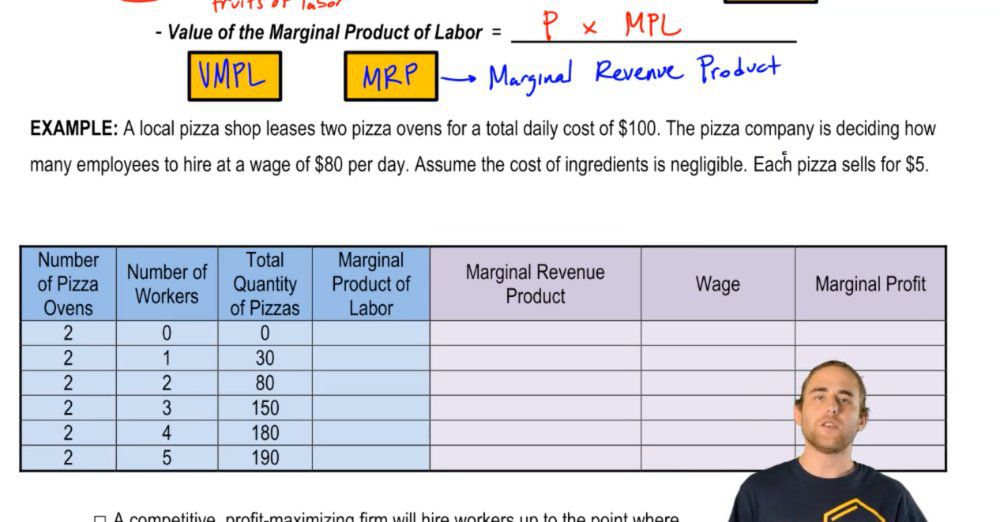
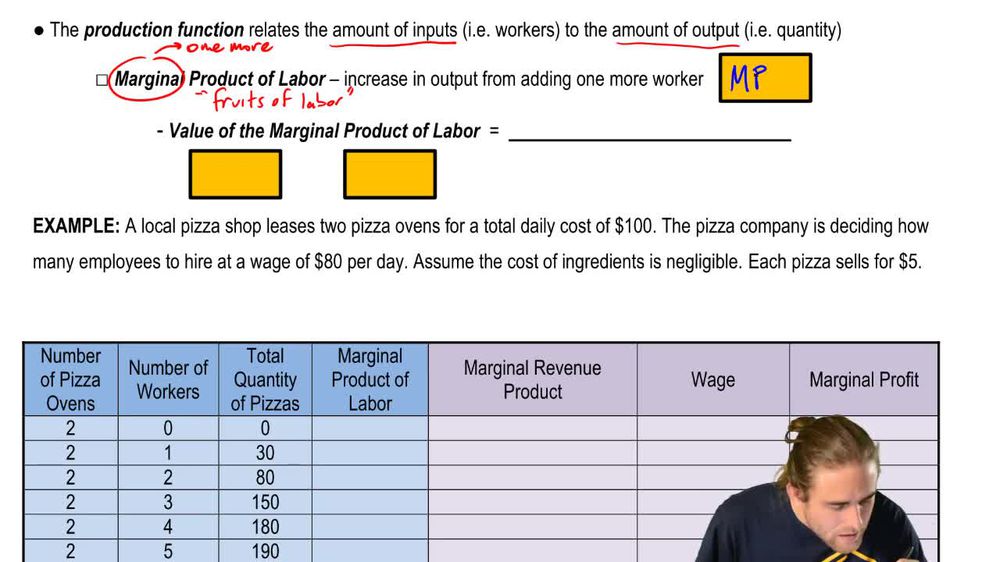
Additional output generated by employing one more worker, often abbreviated as MPL.
Marginal Revenue Product
Extra revenue a firm earns from hiring one additional worker, calculated as MPL times price.
Product Markets
Markets where goods and services are sold, distinct from those where production factors are traded.
Factor Markets
Markets in which firms demand and individuals supply resources needed for production.
Innovation
Introduction of new ideas or methods, often associated with entrepreneurship in organizing production.
Education
Process that increases human capital, leading to higher productivity among workers.
Training
Activity that enhances human capital, improving workforce productivity and output.
Revenue
Income generated from selling output, crucial for calculating marginal revenue product.
 BackBack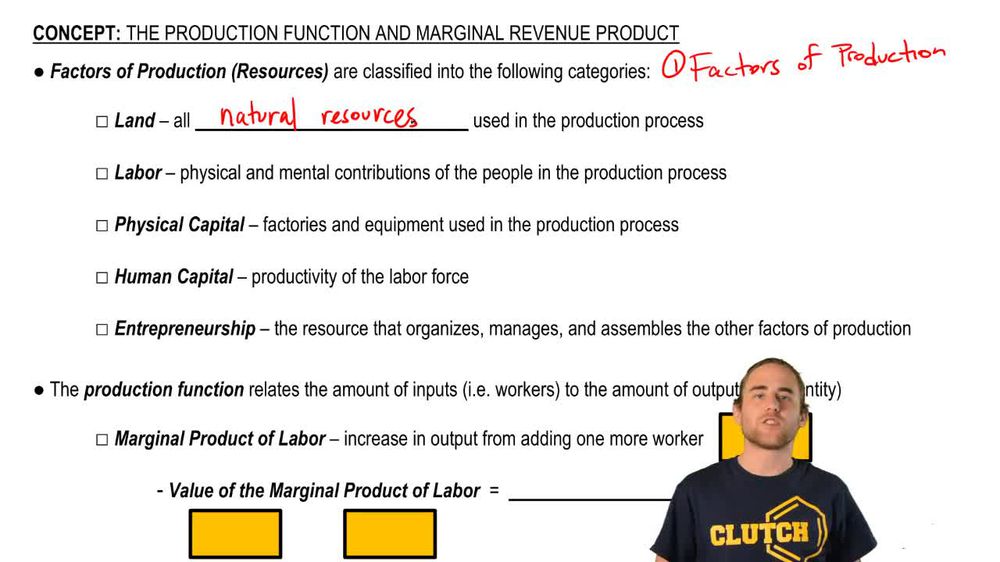
 02:41
02:41