Skip to main content
Microeconomics
My Course
Learn
Exam Prep
AI Tutor
Study Guides
Flashcards
Explore
Try the app
My Course
Learn
Exam Prep
AI Tutor
Study Guides
Flashcards
Explore
Try the app
Back
Tax Equity definitions
You can tap to flip the card.
Tax Equity
You can tap to flip the card.
👆
Tax Equity
Fairness in distributing tax burdens, considering both who benefits and who can afford to pay, guiding tax system design.
Track progress
Control buttons has been changed to "navigation" mode.
1/15
Related flashcards
Related practice
Recommended videos
Tax Equity quiz #1
Tax Equity
10 Terms
Tax Equity
6. Introduction to Taxes and Subsidies
10 problems
Topic
Tax Efficiency
6. Introduction to Taxes and Subsidies
10 problems
Topic
6. Introduction to Taxes and Subsidies
8 topics
12 problems
Chapter
Guided course
04:18
Regressive, Proportional, and Progressive Taxes
5
views
Guided course
06:42
Tax Equity
4
views
Terms in this set (15)
Hide definitions
Tax Equity
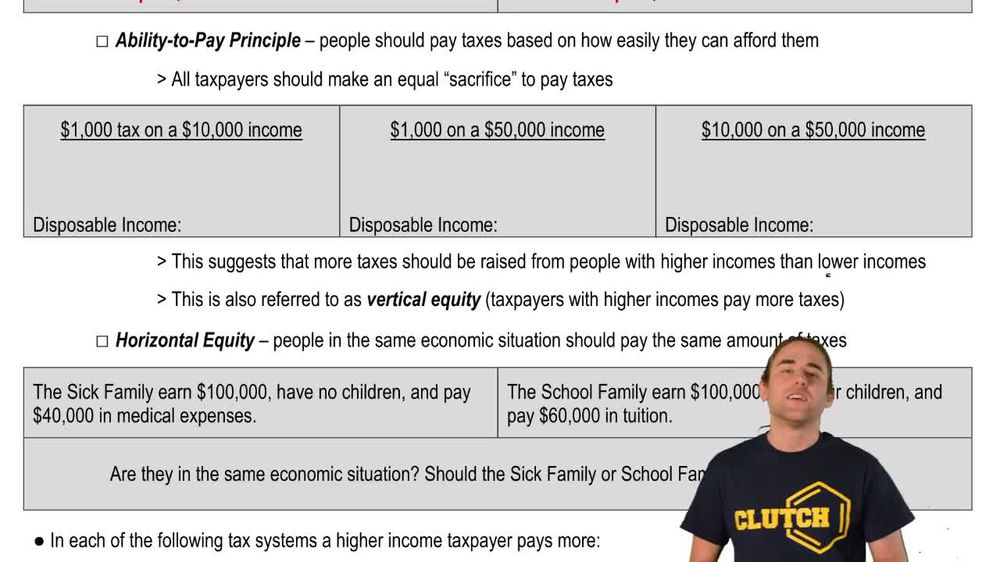
Fairness in distributing tax burdens, considering both who benefits and who can afford to pay, guiding tax system design.
Benefits Principle
Concept where those receiving public services or advantages contribute to funding them through targeted taxes.
Ability to Pay Principle
Guideline suggesting tax amounts should reflect financial capacity, ensuring equal sacrifice among taxpayers.
Disposable Income
Funds remaining after taxes, used for personal expenses, indicating the impact of taxation on individual lifestyles.
Vertical Equity
Approach where higher earners contribute more in taxes, aligning payments with income levels to promote fairness.
Horizontal Equity
Standard aiming for equal tax treatment among individuals in similar financial circumstances, despite differing expenses.
Regressive Tax
Structure where tax rates decrease as income rises, potentially placing a heavier burden on lower earners.
Proportional Tax
System applying a constant tax rate to all income levels, resulting in higher total payments for those earning more.
Progressive Tax
Arrangement where tax rates increase with income, ensuring those with greater means pay a higher percentage.
Tax Rate
Percentage of income or value subject to taxation, varying by system and influencing total tax paid.
Tax Burden
Extent of financial obligation imposed by taxes, shaped by income, expenses, and tax system structure.
Tax Revenue
Funds collected by government through taxation, used for public services and infrastructure maintenance.
Ethical Considerations
Factors influencing tax policy, such as fairness in accommodating medical or educational expenses.
Public Services
Government-provided amenities funded by taxes, including road maintenance and waterway upkeep.
Tax System
Framework determining how taxes are assessed and collected, balancing efficiency and fairness.
 BackBack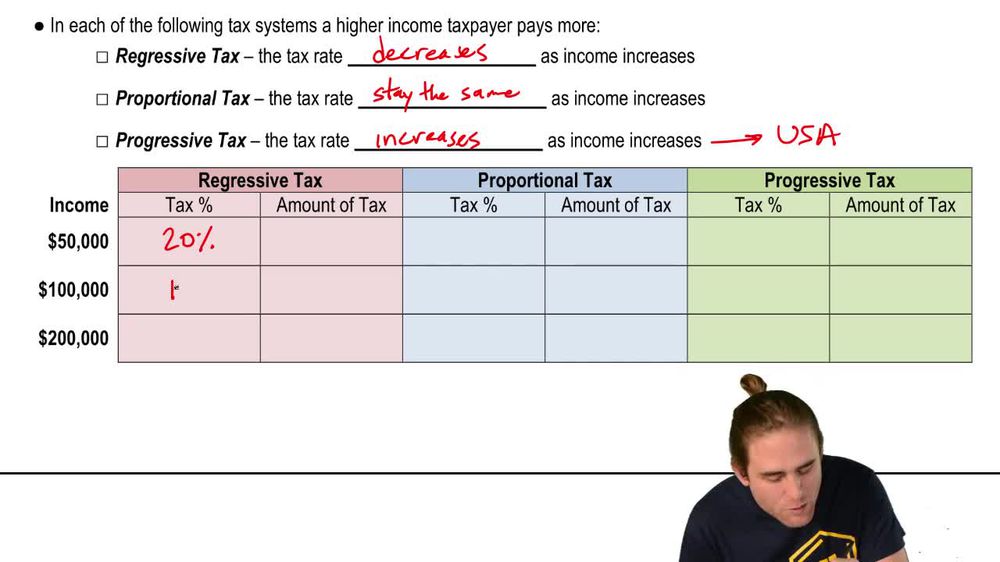
 04:18
04:18