Skip to main content
Microeconomics
My Course
Learn
Exam Prep
AI Tutor
Study Guides
Flashcards
Explore
Try the app
My Course
Learn
Exam Prep
AI Tutor
Study Guides
Flashcards
Explore
Try the app
Back
Supply of Labor in Perfect Competition definitions
You can tap to flip the card.
Labor Supply
You can tap to flip the card.
👆
Labor Supply
Amount of work individuals are willing to offer to firms, influenced by wage levels and the trade-off with leisure.
Track progress
Control buttons has been changed to "navigation" mode.
1/15
Related flashcards
Related practice
Recommended videos
Supply of Labor in Perfect Competition quiz #1
Supply of Labor in Perfect Competition
11 Terms
Supply of Labor in Perfect Competition
15. Markets for the Factors of Production
10 problems
Topic
Shifts in Labor Supply
15. Markets for the Factors of Production
10 problems
Topic
15. Markets for the Factors of Production
10 topics
13 problems
Chapter
Guided course
03:17
Supply of Labor in Perfect Competition
1
views
Guided course
04:34
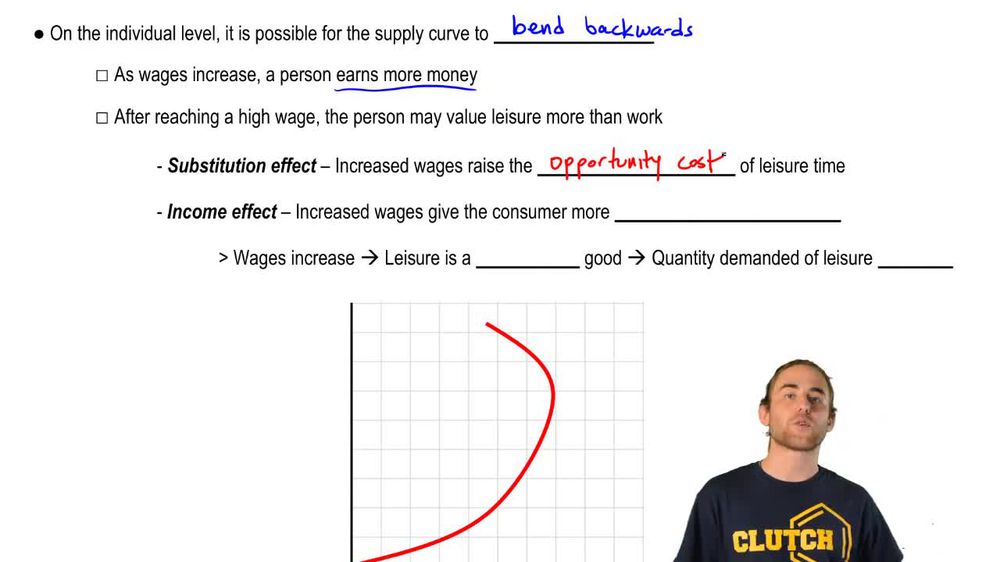
Individual Supply Curve of Labor (Backward-Bending Supply Curve)
1
views
Terms in this set (15)
Hide definitions
Labor Supply
Amount of work individuals are willing to offer to firms, influenced by wage levels and the trade-off with leisure.
Leisure
Time spent not working, including activities like relaxing, exercising, or spending time with family, considered a normal good.
Reservation Wage
Minimum compensation required for an individual to give up leisure and begin working.
Market Supply Curve
Graphical representation showing how total labor offered increases as wages rise across the entire market.
Individual Supply Curve
Graph depicting how a single person's labor offered changes with wage, potentially bending backward at high wage levels.
Backward Bending Supply Curve
Situation where higher wages lead to less labor supplied as individuals prioritize leisure over additional income.
Substitution Effect
Phenomenon where rising wages make leisure more costly, encouraging more work hours initially.
Income Effect
Impact of increased wages boosting purchasing power and desire for leisure, eventually reducing labor supplied.
Opportunity Cost
Value of foregone earnings when choosing leisure over work, rising as wages increase.
Normal Good
Category of goods for which demand rises as income increases; leisure fits this description in labor supply analysis.
Purchasing Power
Ability to buy goods and services, enhanced by higher wages and influencing the balance between work and leisure.
Quantity Supplied
Total hours of labor offered at a specific wage level, varying with changes in compensation.
Wage
Monetary reward per hour or unit of labor, central to decisions about supplying labor.
Trade-off
Balancing act between time spent working and time spent on leisure, shaped by wage incentives.
Supply of Goods
Concept analogous to labor supply, where producers offer products based on price incentives.
 BackBack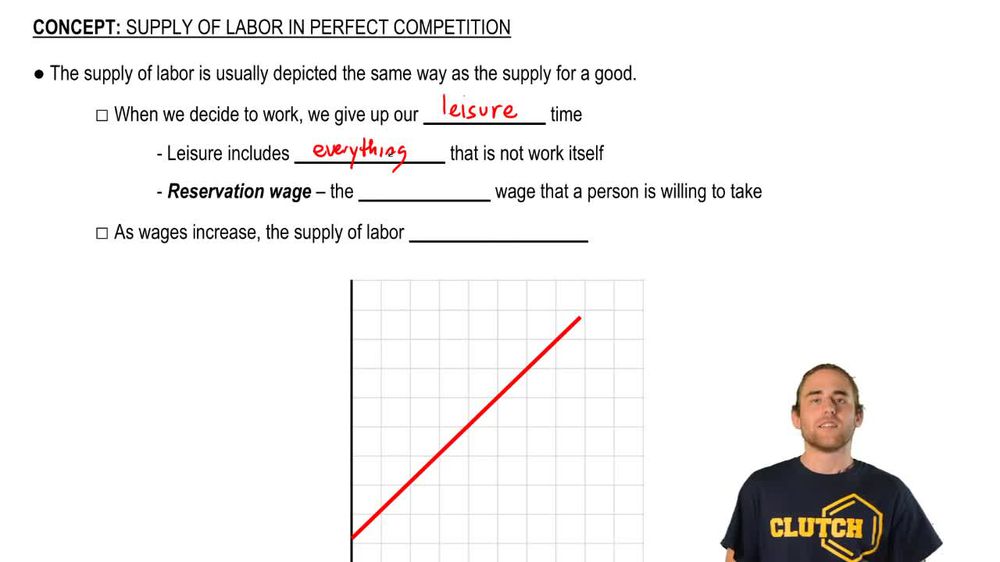
 03:17
03:17