What does a bond represent in financial investments?
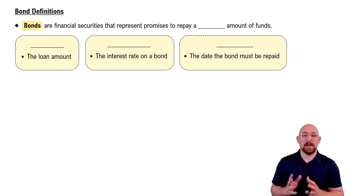
A bond represents a promise to repay a fixed amount of funds, including principal and interest, by a specific maturity date.
What is the principal amount in a bond?
The principal is the loan amount you invest in the bond, which the issuer borrows from you and promises to repay at maturity.
What is the coupon rate on a bond?
The coupon rate is the interest rate on the bond, indicating the rate of return you will receive.
Why are bonds considered relatively low-risk investments?
Bonds are low-risk because you know the repayment terms upfront, and bondholders are prioritized for repayment in bankruptcy.
In the event of bankruptcy, who gets paid first: bondholders or stockholders?
Bondholders are paid before stockholders if a company goes bankrupt.
What does owning stock in a company represent?
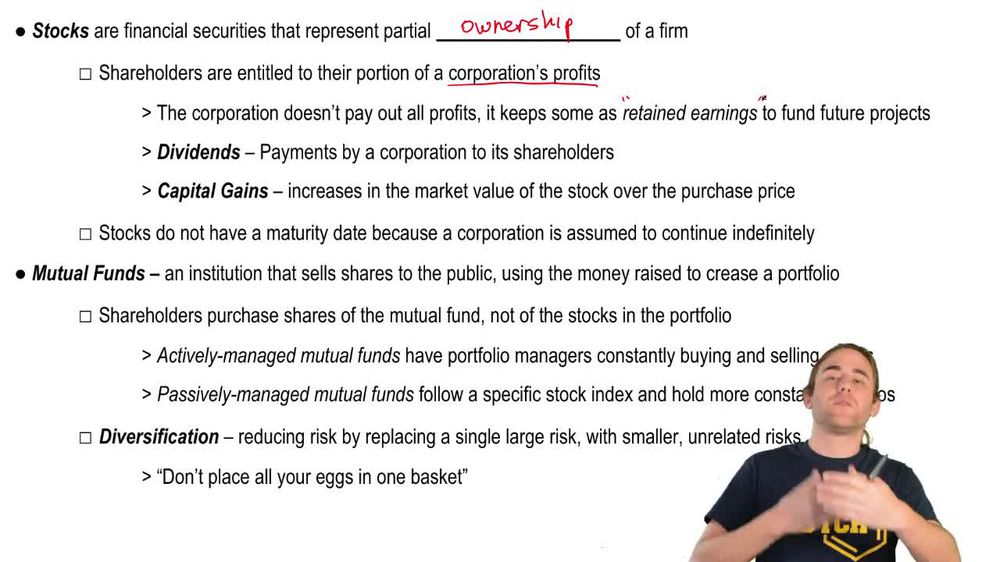
Owning stock means you have partial ownership in the company and are entitled to a share of its profits.
What are the two main ways investors earn returns from stocks?
Investors earn returns from stocks through dividends and capital gains.
What are dividends in the context of stocks?
Dividends are payments of profit that corporations distribute to their shareholders.
What are capital gains in stock investments?
Capital gains are the profits made from selling a stock at a higher price than it was purchased.
Do stocks have a maturity date like bonds?
No, stocks do not have a maturity date; they represent ongoing ownership in a company.
What are retained earnings in a corporation?
Retained earnings are profits that a company keeps to fund future projects instead of distributing them as dividends.
What is a mutual fund?
A mutual fund is an investment vehicle that pools money from many investors to buy a diversified portfolio of stocks, bonds, or other securities.
How do mutual funds help investors achieve diversification?
Mutual funds reduce risk by spreading investments across many different assets, replacing one large risk with several smaller, unrelated risks.
What is the difference between actively managed and passively managed mutual funds?
Actively managed funds have managers who frequently buy and sell assets, while passively managed funds track a specific index and hold a more constant portfolio.
Why might an investor choose to buy shares in a mutual fund instead of individual stocks or bonds?
Investors buy mutual funds to achieve diversification and reduce risk without having to select and manage individual investments themselves.
 Back
Back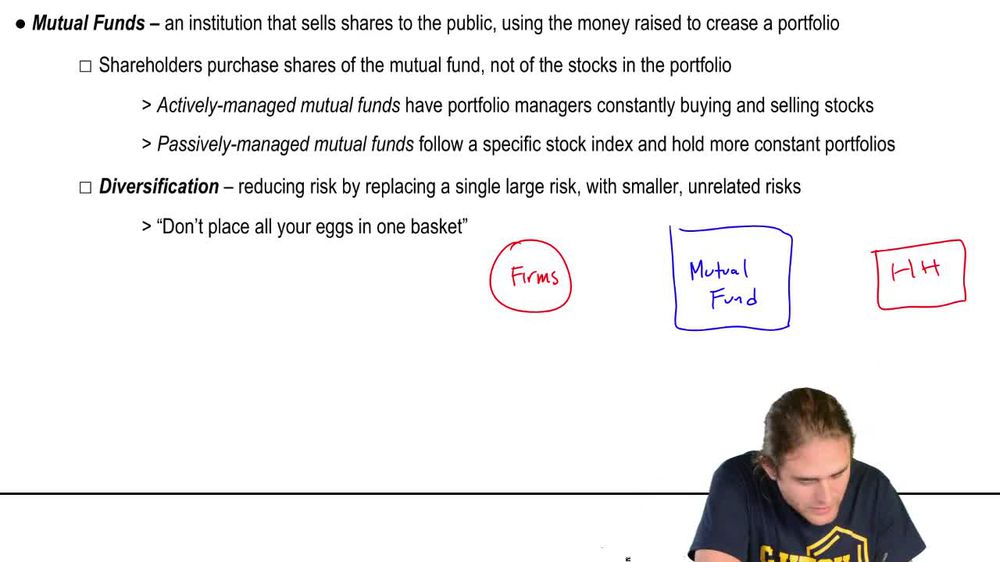
 02:47
02:47