Skip to main content
Microeconomics
My Course
Learn
Exam Prep
AI Tutor
Study Guides
Flashcards
Explore
Try the app
My Course
Learn
Exam Prep
AI Tutor
Study Guides
Flashcards
Explore
Try the app
Back
Shifts in Labor Demand definitions
You can tap to flip the card.
Labor Demand Curve
You can tap to flip the card.
👆
Labor Demand Curve
Graphical representation showing how the quantity of workers hired changes as wages or other factors shift.
Track progress
Control buttons has been changed to "navigation" mode.
1/15
Related flashcards
Related practice
Recommended videos
Shifts in Labor Demand quiz #1
Shifts in Labor Demand
10 Terms
Shifts in Labor Demand
15. Markets for the Factors of Production
9 problems
Topic
Supply of Labor in Perfect Competition
15. Markets for the Factors of Production
10 problems
Topic
15. Markets for the Factors of Production
10 topics
13 problems
Chapter
Guided course
03:09
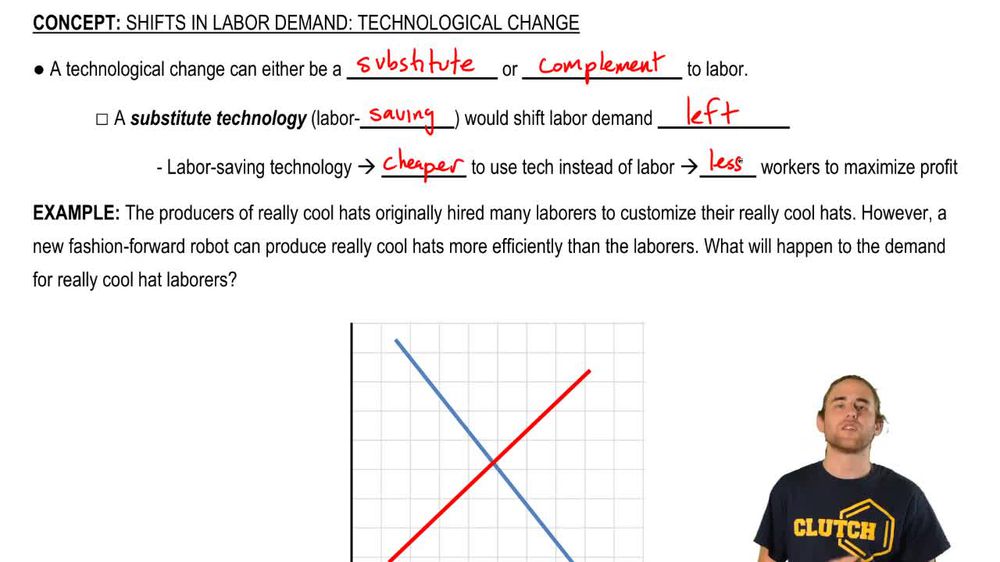
Shifts in Labor Demand:Technological Change (II)
3
views
Guided course
06:57
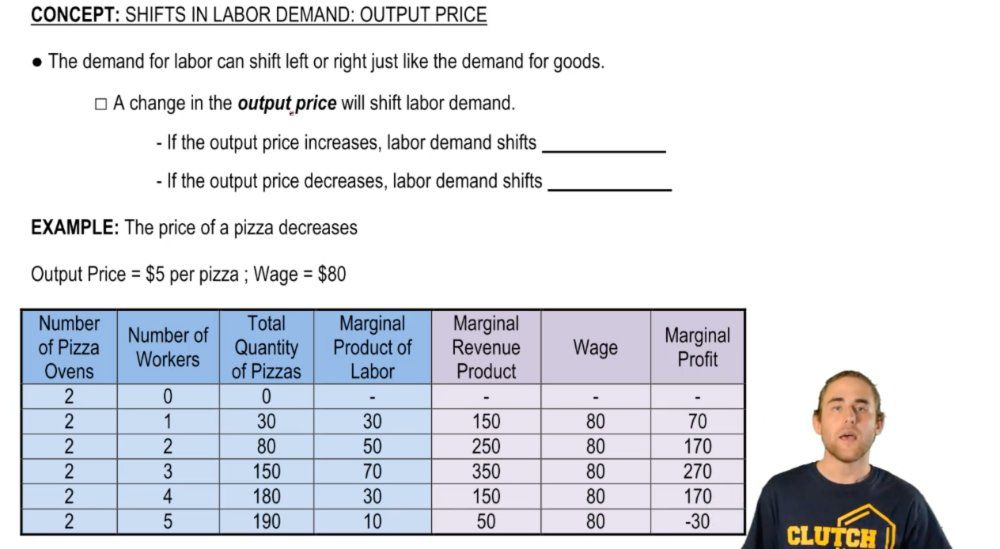
Shifts in Labor Demand:Output Price
3
views
Guided course
03:01
Shifts in Labor Demand:Technological Change (I)
5
views
Terms in this set (15)
Hide definitions
Labor Demand Curve
Graphical representation showing how the quantity of workers hired changes as wages or other factors shift.
Output Price
Monetary value received for each unit of product sold, directly affecting hiring decisions and labor demand.
Marginal Revenue Product
Amount earned from hiring one additional worker, calculated by multiplying output price by marginal product.
Marginal Product of Labor
Extra output produced by adding one more worker, holding all other inputs constant.
Wage
Payment made to workers for their labor, serving as the marginal cost in hiring decisions.
Labor Saving Technology
Innovation that replaces workers, reducing the need for labor and shifting demand leftward.
Labor Augmenting Technology
Advancement that boosts worker productivity, increasing labor demand and raising wages.
Equilibrium Quantity
Number of workers hired where labor supply and demand intersect, reflecting market balance.
Equilibrium Wage
Compensation rate at which labor supply equals labor demand, determining market clearing price.
Profit Maximizing Quantity
Optimal number of workers hired where marginal revenue product equals wage, maximizing firm profit.
Substitute Technology
Tool or process used instead of labor, leading to fewer workers being hired and lower wages.
Complementary Technology
Innovation that enhances worker effectiveness, resulting in more labor being demanded and higher wages.
Labor Market
Arena where employers seek workers and workers offer their services, governed by supply and demand.
Demand Shift
Movement of the labor demand curve due to changes in output price or technology, altering hiring levels.
Marginal Profit
Difference between additional revenue from hiring a worker and the wage paid, guiding employment decisions.
 BackBack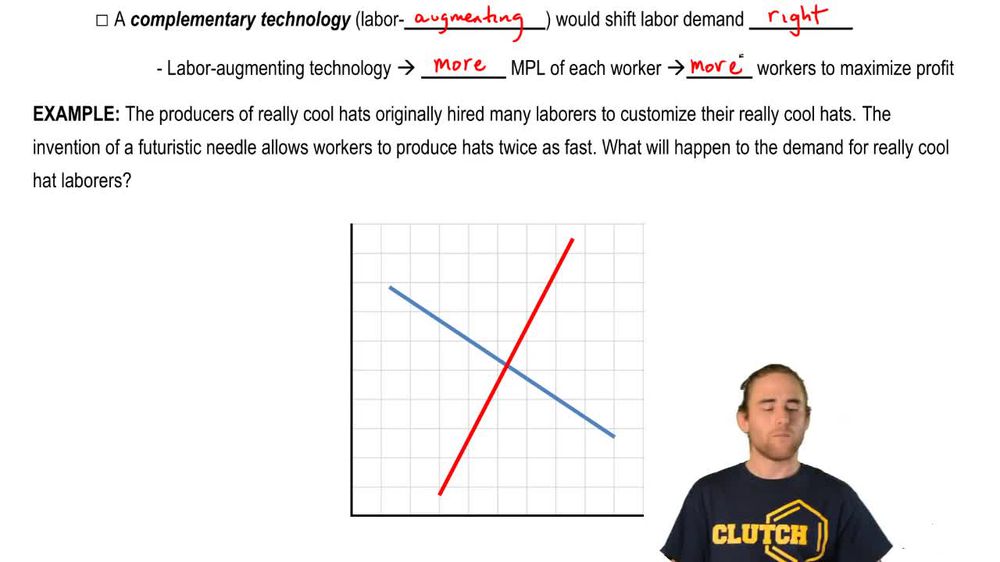
 03:09
03:09