What are the main factors that can shift the short-run aggregate supply (SRAS) curve?
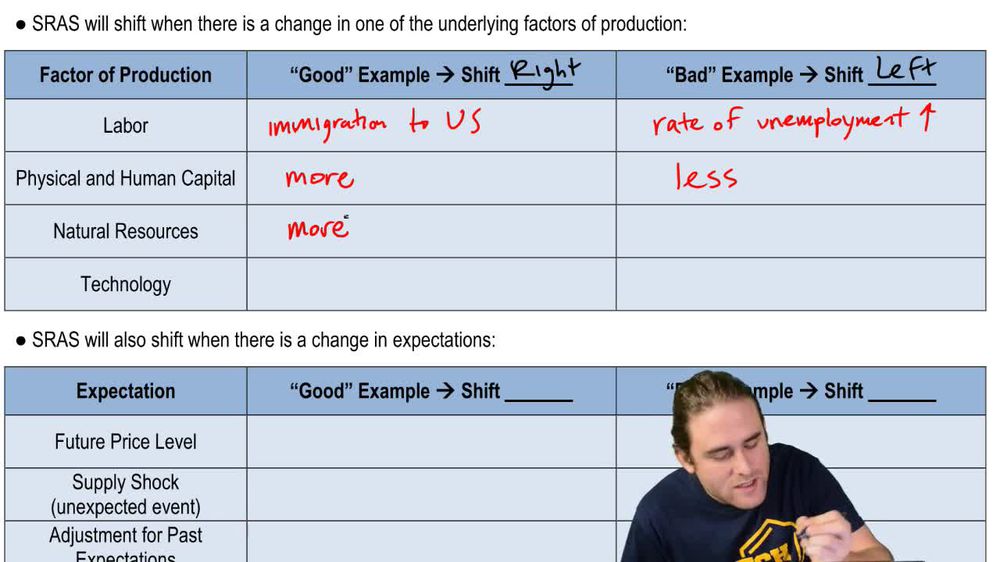
The main factors are changes in labor, physical and human capital, natural resources, technology, expectations of future price levels, supply shocks, and adjustments for past expectations.
What happens to the SRAS curve if there is an influx of labor into the economy?
An influx of labor shifts the SRAS curve to the right, indicating an increase in aggregate supply.
How does an increase in the natural rate of unemployment affect the SRAS curve?
An increase in the natural rate of unemployment shifts the SRAS curve to the left, reducing aggregate supply.
What effect does an increase in physical or human capital have on SRAS?
An increase in physical or human capital shifts the SRAS curve to the right, reflecting greater productive capacity.
How do more available natural resources impact the SRAS curve?
More available natural resources shift the SRAS curve to the right, increasing aggregate supply.
What is the effect of technological improvements on SRAS?
Technological improvements shift the SRAS curve to the right, as production becomes more efficient.
How do expectations of higher future price levels affect SRAS?
Expectations of higher future price levels shift the SRAS curve to the right, as firms increase production to meet anticipated demand.
What is a supply shock and how does it affect SRAS?
A supply shock is an unexpected event that changes the availability or cost of key resources, shifting the SRAS curve either right (positive shock) or left (negative shock).
How does the discovery of a new oil reserve affect SRAS?
The discovery of a new oil reserve is a positive supply shock that shifts the SRAS curve to the right.
What happens to SRAS if there is a sudden scarcity of a key resource?
A sudden scarcity of a key resource shifts the SRAS curve to the left, decreasing aggregate supply.
How do adjustments for past price expectations influence SRAS?
If past expectations about price levels were incorrect, SRAS adjusts by shifting back toward its original position to reflect actual outcomes.
What is the general direction of long-run aggregate supply shifts over time and why?
Long-run aggregate supply generally shifts to the right over time due to increases in resources, population, and technology.
How does immigration into a country affect SRAS?
Immigration increases the labor force, shifting the SRAS curve to the right.
What is the effect on SRAS if firms expect future price levels to decrease?
If firms expect future price levels to decrease, the SRAS curve shifts to the left as firms reduce production.
Why might SRAS shift back to the right after previously shifting left due to incorrect price expectations?
If lower price expectations were not realized, SRAS shifts back to the right to adjust for the actual higher prices.
 Back
Back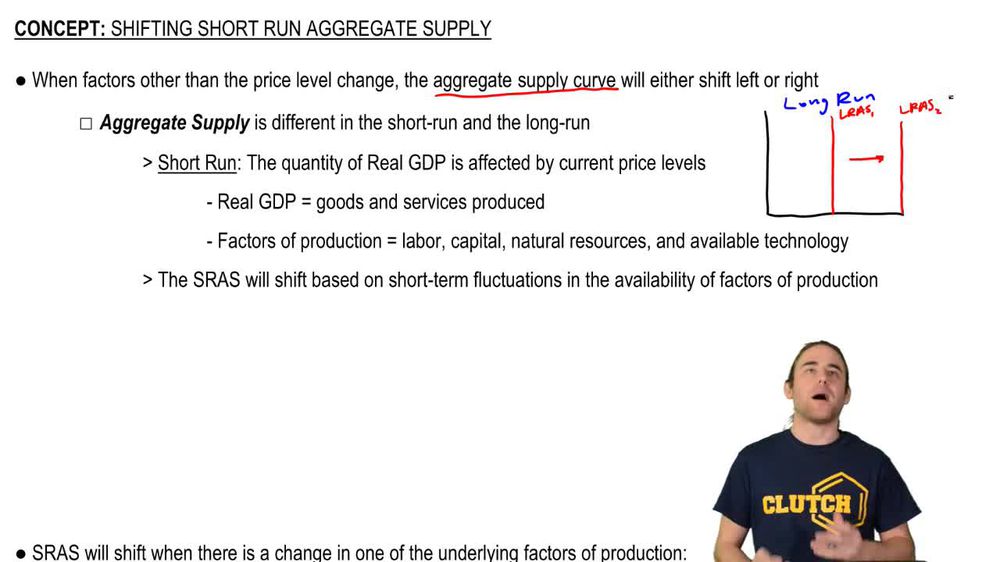
 03:03
03:03