Microeconomics
My Course
Learn
Exam Prep
AI Tutor
Study Guides
Flashcards
Explore
Try the app
My Course
Learn
Exam Prep
AI Tutor
Study Guides
Flashcards
Explore
Try the app
Back
Shifts in the Demand Curve definitions
You can tap to flip the card.
Demand Curve
You can tap to flip the card.
👆
Demand Curve
A graphical representation showing the relationship between price and the quantity consumers are willing to buy at each price.
Track progress
Control buttons has been changed to "navigation" mode.
1/15
Related flashcards
Related practice
Recommended videos
Shifts in the Demand Curve quiz #1
Shifts in the Demand Curve
38 Terms
Shifts in the Demand Curve quiz #2
Shifts in the Demand Curve
34 Terms
Shifts in the Demand Curve
3. The Market Forces of Supply and Demand
10 problems
Topic
Movement Along a Demand Curve
3. The Market Forces of Supply and Demand
8 problems
Topic
3. The Market Forces of Supply and Demand
11 topics
15 problems
Chapter
Guided course
01:48
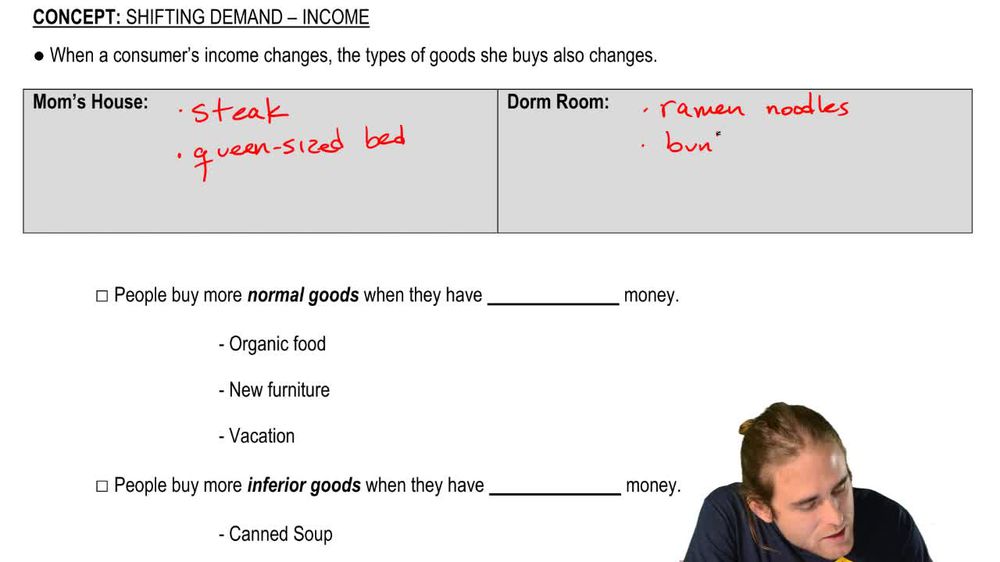
Consumer Income:Normal Goods and Inferior Goods
13
views
1
rank
Guided course
04:10
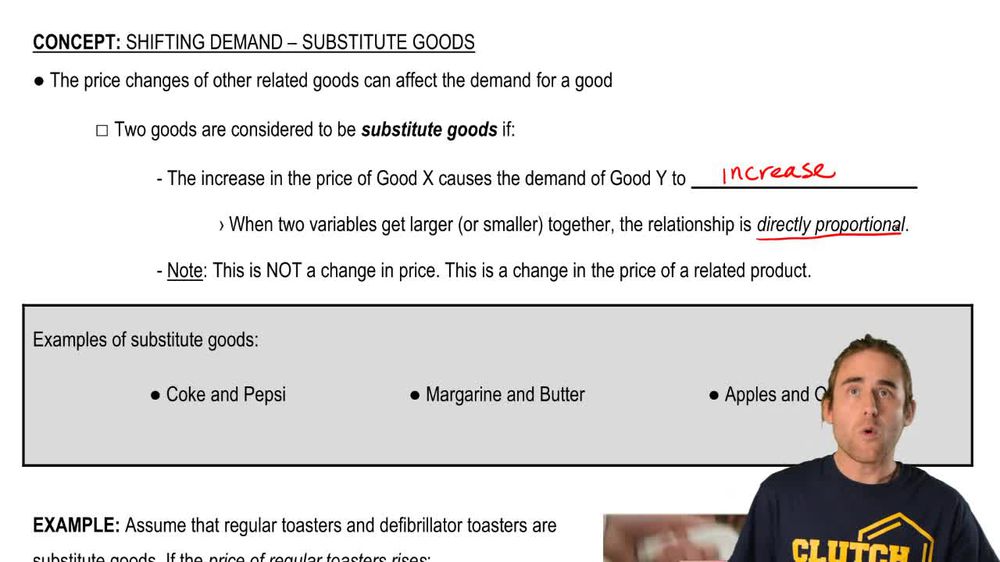
Substitute Goods
Guided course
02:18
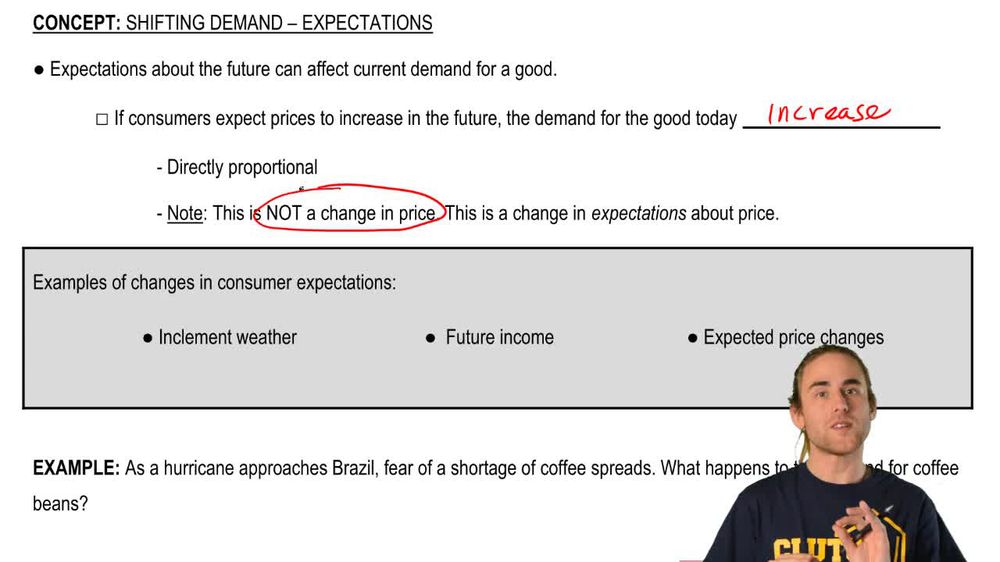
Consumer Expectations
7
views
Terms in this set (15)
Hide definitions
Demand Curve
A graphical representation showing the relationship between price and the quantity consumers are willing to buy at each price.
Normal Goods
Products for which demand increases as consumer income rises, often associated with higher quality or luxury.
Inferior Goods
Items for which demand decreases as consumer income rises, typically considered lower quality or budget options.
Substitute Goods
Products that can replace each other; a price increase in one leads to higher demand for the other.
Complementary Goods
Items usually purchased together; a price increase in one causes demand for the other to fall.
Consumer Preferences
Tastes and trends influencing demand; shifts occur when popularity or desirability of a product changes.
Consumer Expectations
Beliefs about future prices or income that affect current demand, often leading to increased purchases if higher prices are anticipated.
Number of Consumers
The total population of buyers in a market; more buyers generally result in higher demand.
Directly Proportional Relationship
A situation where two variables move in the same direction, such as income and demand for normal goods.
Inversely Proportional Relationship
A scenario where one variable rises as the other falls, like price of complements and demand.
Quantity Demanded
The specific amount of a product consumers are willing to buy at a given price, represented by movement along the curve.
Shift to the Right
An increase in demand, shown as the demand curve moving outward, often due to positive market changes.
Shift to the Left
A decrease in demand, depicted as the demand curve moving inward, usually caused by negative market factors.
Advertising
A tool for increasing the number of consumers by raising awareness and desirability of a product.
Market
The environment where buyers and sellers interact, influencing demand through various determinants.