Skip to main content
Microeconomics
My Course
Learn
Exam Prep
AI Tutor
Study Guides
Flashcards
Explore
Try the app
My Course
Learn
Exam Prep
AI Tutor
Study Guides
Flashcards
Explore
Try the app
Back
Allocative Efficiency, Productive Efficiency, and Equality definitions
You can tap to flip the card.
Efficiency
You can tap to flip the card.
👆
Efficiency
Maximum benefit is achieved from limited resources, ensuring no opportunity is wasted in production or allocation.
Track progress
Control buttons has been changed to "navigation" mode.
1/15
Related flashcards
Related practice
Recommended videos
Allocative Efficiency, Productive Efficiency, and Equality quiz #1
Allocative Efficiency, Productive Efficiency, and Equality
39 Terms
Allocative Efficiency, Productive Efficiency, and Equality quiz #2
Allocative Efficiency, Productive Efficiency, and Equality
10 Terms
Allocative Efficiency, Productive Efficiency, and Equality
0. Basic Principles of Economics
10 problems
Topic
Positive and Normative Analysis
0. Basic Principles of Economics
8 problems
Topic
0. Basic Principles of Economics
13 topics
14 problems
Chapter
Guided course
01:17
Equality
35
views
Guided course
04:04
Efficiency and Productive Efficiency
66
views
2
rank
Guided course
02:23
Allocative Efficiency
41
views
1
rank
Terms in this set (15)
Hide definitions
Efficiency
Maximum benefit is achieved from limited resources, ensuring no opportunity is wasted in production or allocation.
Productive Efficiency
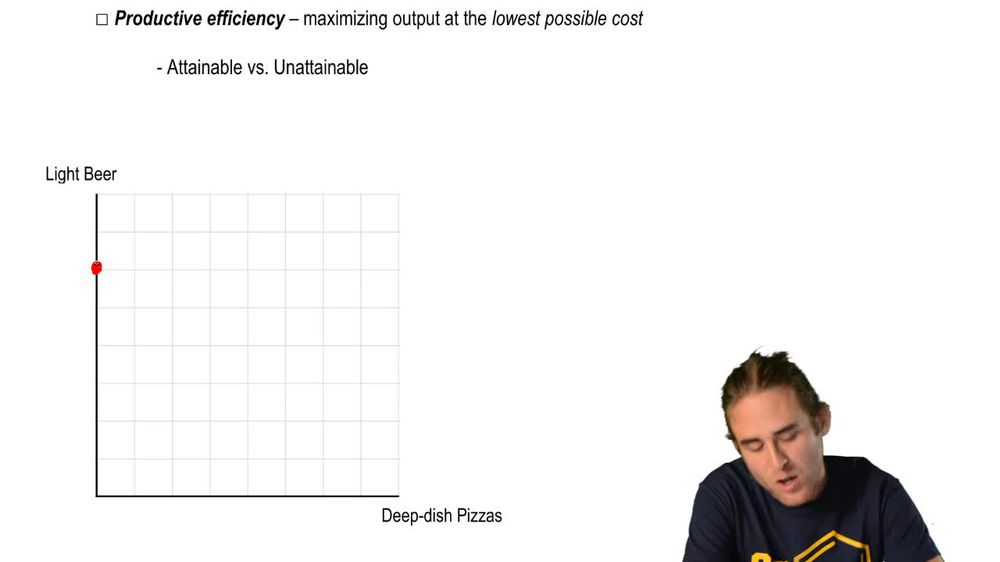
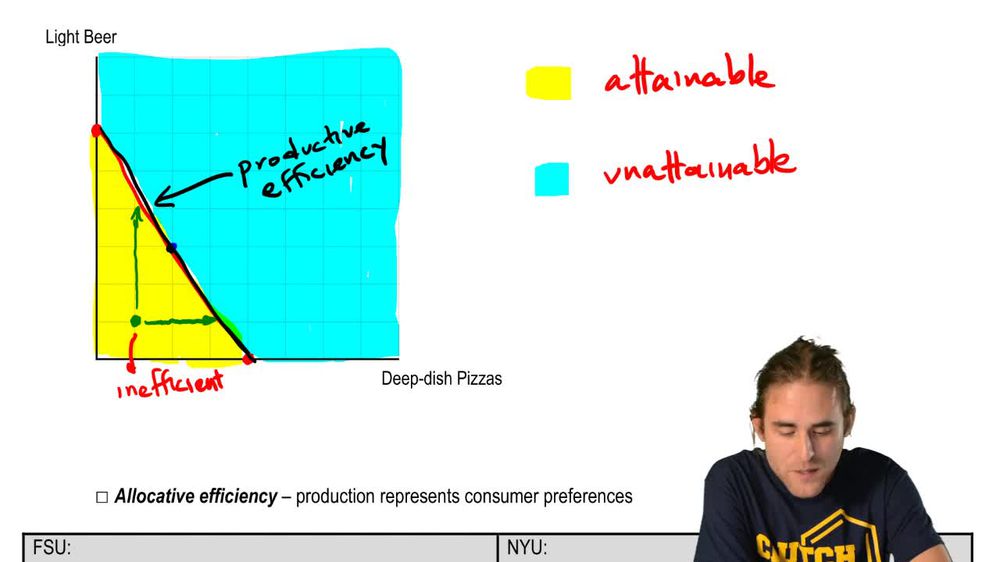
Output is maximized at the lowest possible cost, using all available resources without waste.
Allocative Efficiency
Production reflects consumer preferences, resulting in the optimal mix of goods and services for society.
Scarce Resources
Inputs are limited, requiring choices about their best use to maximize benefits.
Production Possibilities Curve
A graphical representation showing attainable and unattainable combinations of goods with available resources.
Attainable Area
Region inside the curve where production is possible given current resources.
Unattainable Area
Region outside the curve where production exceeds available resources and cannot be achieved.
Consumer Preference
Desires and priorities of buyers that determine the optimal mix of goods produced.
Ethics
Moral considerations influencing decisions about fair distribution and production choices.
Equality
Fairness in distributing economic benefits among members of society.
Equity
Justice in allocation, ensuring individuals receive their fair share of resources.
Government Intervention
Actions by authorities to influence market outcomes, often to promote fairness or correct imbalances.
Economic Benefits
Advantages gained from production and distribution, including goods, services, and welfare.
Output
Total quantity of goods and services produced by an economy.
Cost
Value of resources used in production, influencing efficiency and allocation decisions.
 BackBack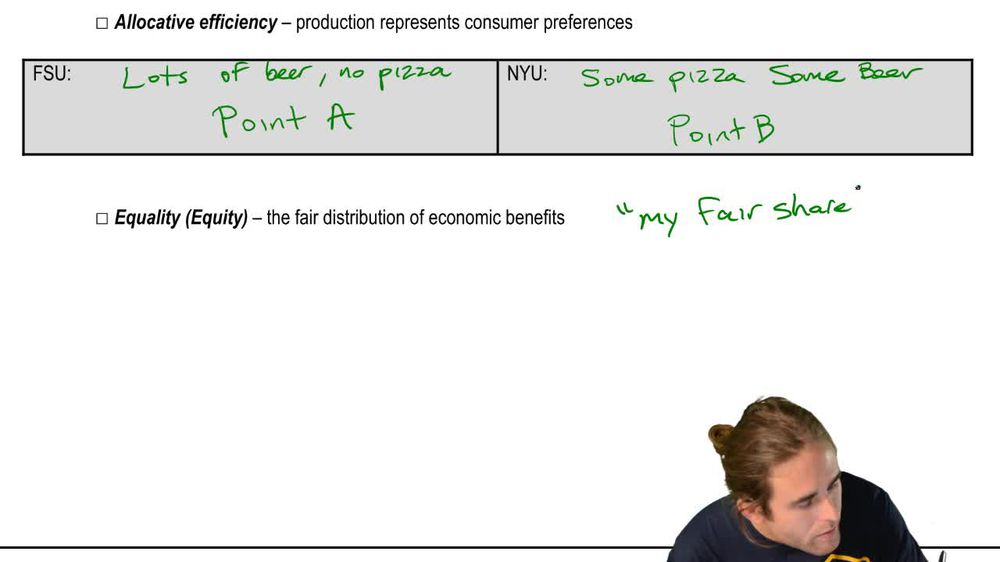
 01:17
01:17