Back

Four Types of Goods and Two Characteristics definitions

Control buttons has been changed to "navigation" mode.
1/15
  • Rivalry

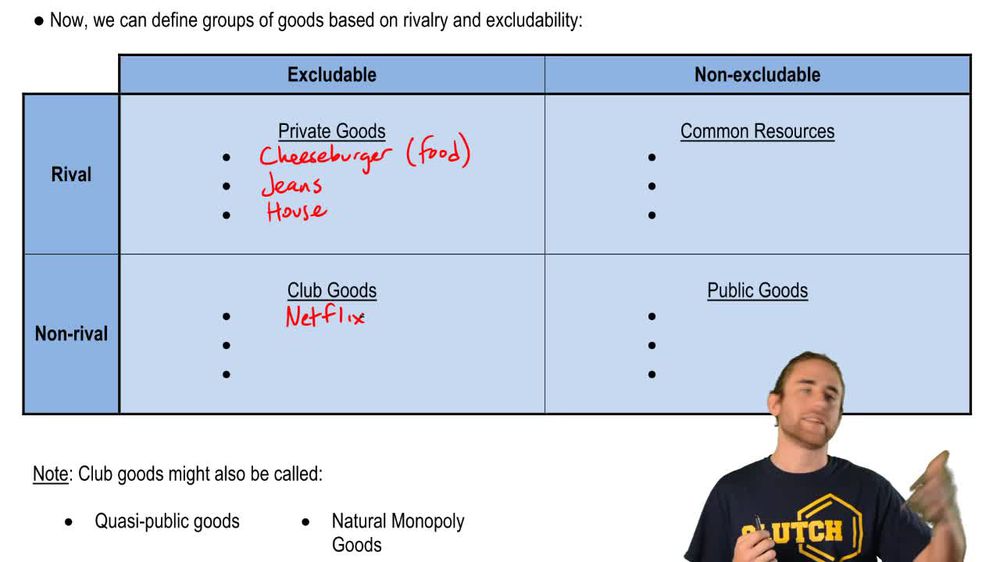
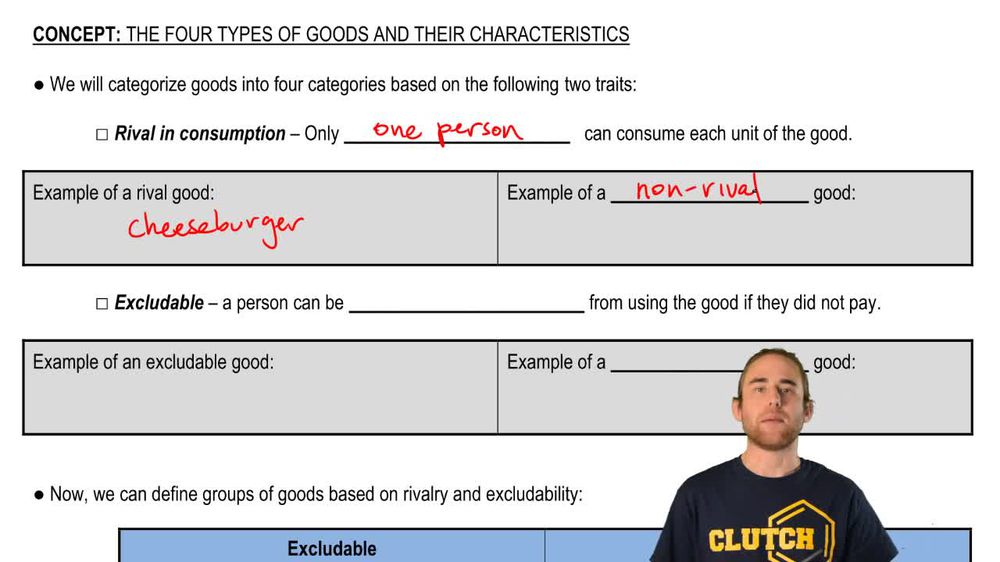
    Occurs when one person's use of a good prevents others from using the same unit, like eating a cheeseburger.
  • Excludability

    Describes the ability to prevent someone from accessing a good, usually based on payment, such as a Netflix subscription.
  • Private Goods

    Items that are both excludable and rival, meaning only one person can use them at a time and payment is required.
  • Club Goods

    Resources that are excludable but non-rival, allowing multiple users after payment, like Netflix or uncongested toll roads.
  • Common Resources

    Goods that are non-excludable and rival, accessible to all but depleted by individual use, such as fish in the ocean.
  • Public Goods

    Items that are both non-excludable and non-rival, available to everyone without reducing others' access, like national defense.
  • Artificial Scarcity

    A situation where access to a non-rival good is limited by payment, making it scarce despite unlimited consumption.
  • Natural Monopoly

    A market condition where a single provider efficiently supplies a non-rival, excludable good, often seen with club goods.
  • Uncongested Toll Road

    A club good example where payment is required for access, but one person's use does not affect others when traffic is absent.
  • Clean Air

    A common resource that is accessible to all but can be diminished by pollution, illustrating rivalry and non-excludability.
  • National Defense

    A public good that protects all members of a nation equally, with no exclusion and no reduction in protection for others.
  • Court System

    A public good providing legal access to all, where one person's use does not limit another's ability to seek justice.
  • Quasi Public Goods

    Goods with characteristics between public and club goods, often excludable but non-rival, like cable TV.
  • Scarcity

    The condition where resources are limited and must be allocated, often intensified by rivalry or artificial restrictions.
  • Non-Excludability

    A trait where no one can be prevented from using a good, regardless of payment, as seen with public goods and common resources.