Back

Externalities: Social Benefits and Social Costs definitions

Control buttons has been changed to "navigation" mode.
1/14
  • Externality

    Impact on individuals outside a transaction, resulting in unintended costs or benefits for society.
  • Negative Externality

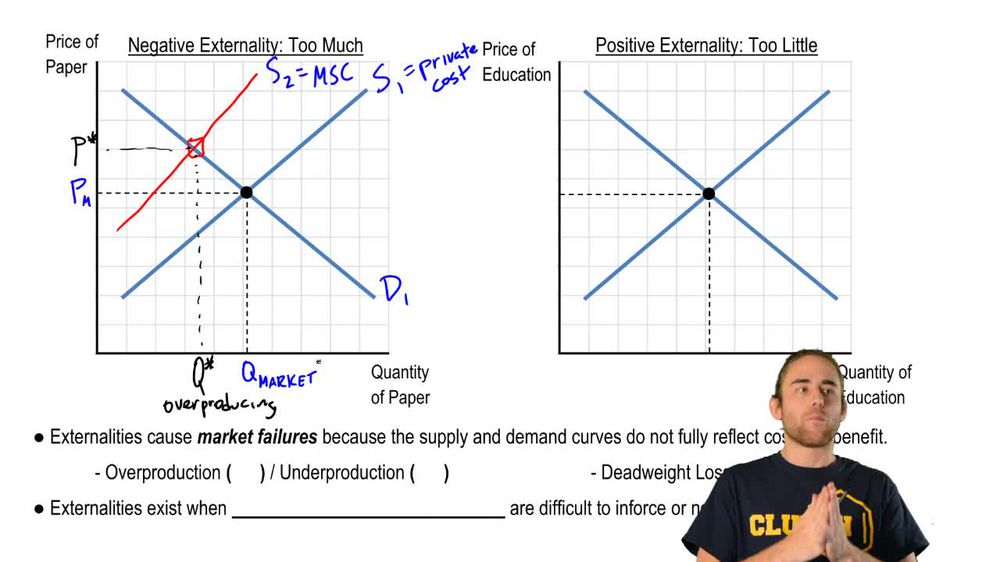
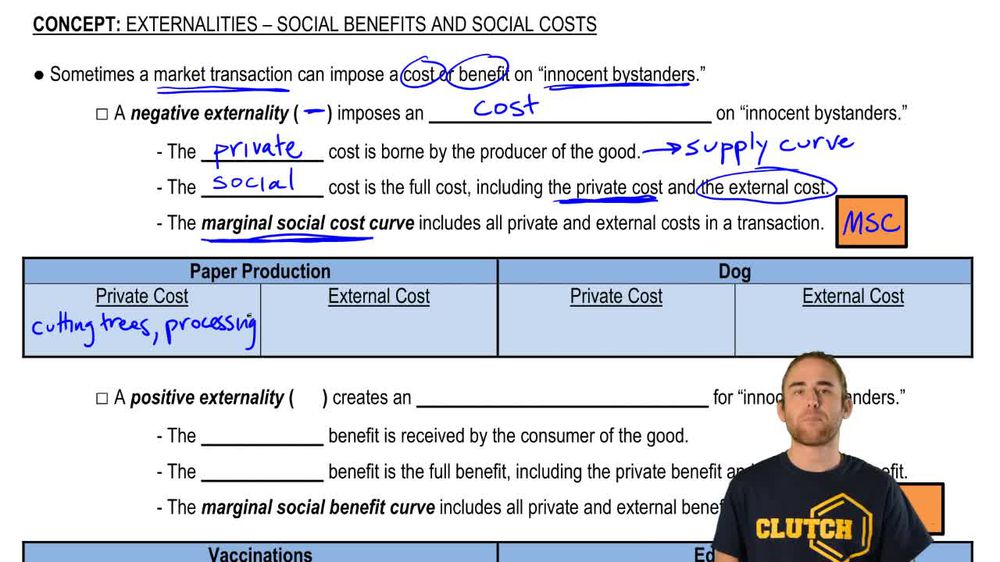
    Unintended harm imposed on bystanders, such as pollution affecting residents near a factory.
  • Positive Externality

    Unintended benefit received by bystanders, like increased productivity from widespread education.
  • Private Cost

    Expense incurred by producers, reflected in the supply curve, excluding effects on outsiders.
  • Social Cost

    Total expense to society, combining private and external costs, shown by the marginal social cost curve.
  • External Cost

    Expense imposed on individuals not involved in a transaction, such as pollution or noise.
  • Marginal Social Cost

    Incremental expense to society for producing one more unit, including both private and external costs.
  • Private Benefit

    Advantage gained by buyers, represented by the demand curve, excluding effects on others.
  • Social Benefit

    Total advantage to society, combining private and external benefits, shown by the marginal social benefit curve.
  • External Benefit

    Advantage received by individuals not involved in a transaction, such as reduced disease spread from vaccination.
  • Marginal Social Benefit

    Incremental advantage to society from consuming one more unit, including both private and external benefits.
  • Market Failure

    Situation where market outcomes are inefficient, often due to unaccounted externalities.
  • Deadweight Loss

    Lost societal surplus from inefficient production levels, visible as a gap between actual and optimal equilibrium.
  • Property Rights

    Legal ownership and control over resources, crucial for determining whether externalities arise.