Skip to main content
Microeconomics
My Course
Learn
Exam Prep
AI Tutor
Study Guides
Flashcards
Explore
Try the app
My Course
Learn
Exam Prep
AI Tutor
Study Guides
Flashcards
Explore
Try the app
Back
Dynamic AD-AS Model: Introduction definitions
You can tap to flip the card.
Dynamic AD-AS Model
You can tap to flip the card.
👆
Dynamic AD-AS Model
A framework where aggregate demand and supply curves shift over time, capturing real-world growth and inflation.
Track progress
Control buttons has been changed to "navigation" mode.
1/15
Related flashcards
Recommended videos
Dynamic AD-AS Model: Introduction quiz
Dynamic AD-AS Model: Introduction
15 Terms
04:59
Dynamic AD-AS Model: Introduction
Terms in this set (15)
Hide definitions
Dynamic AD-AS Model
A framework where aggregate demand and supply curves shift over time, capturing real-world growth and inflation.
Aggregate Demand
Total spending on goods and services in an economy, influenced by consumption, investment, and government expenditures.
Aggregate Supply
Total output producers are willing to supply at various price levels, affected by population and technology changes.
Long-Run Aggregate Supply
Represents potential GDP at full employment, shifting right as economies grow and technology advances.
Short-Run Aggregate Supply
Depicts current production capacity, moving right with population growth and technological improvements.
Potential GDP
Maximum sustainable output an economy can achieve when fully utilizing resources.
Equilibrium Price Level
The consumer price index where aggregate demand equals aggregate supply, marking macroeconomic balance.
Inflation
Persistent increase in overall price levels, common in most economies and overlooked in traditional models.
Economic Growth
Expansion of real GDP over time, driven by population increases and technological progress.
Consumer Price Index
A measure tracking changes in average prices paid by consumers for goods and services.
Recession
A period of declining economic activity, often misrepresented by traditional models as causing price drops.
Technological Advances
Improvements in production methods, enabling higher output and shifting supply curves rightward.
Population Growth
Increase in the number of people, leading to greater consumption and shifting demand and supply curves.
Investment
Expenditure by businesses to expand productive capacity, rising as economies grow.
Government Spending
Outlays by the public sector to provide services, increasing with population and economic expansion.
 BackBack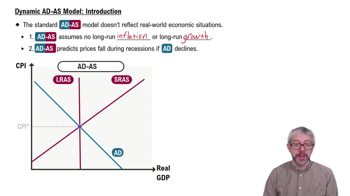
 04:59
04:59