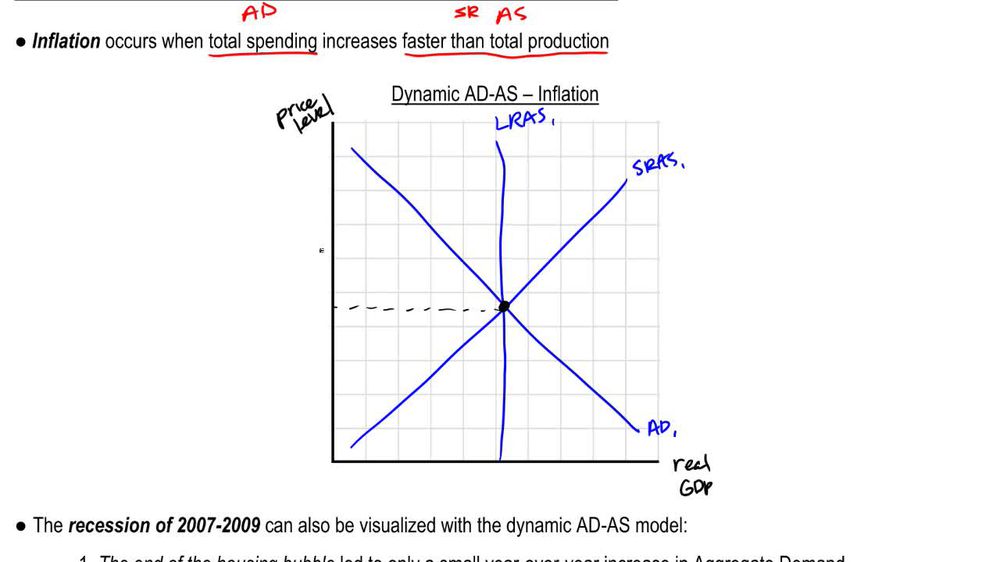
Inflation occurs when aggregate demand increases faster than short-run aggregate supply, causing the price level to rise.
In the dynamic AD-AS model, what happens to the price level when aggregate demand shifts more than short-run aggregate supply?
The price level increases, resulting in inflation.
How does real GDP change during inflation in the dynamic AD-AS model?
Real GDP still increases year over year due to growth in potential GDP, even as prices rise.
What is the main graphical indicator of inflation in the dynamic AD-AS model?
A large rightward shift in aggregate demand compared to a smaller rightward shift in short-run aggregate supply.
What typically happens to long-run aggregate supply in the dynamic AD-AS model over time?
Long-run aggregate supply shifts to the right each year, reflecting growth in potential GDP.
What event marked the beginning of the 2007-2009 recession in the dynamic AD-AS model?
The end of the housing bubble, which led to a small increase in aggregate demand.
How did the financial crisis during the 2007-2009 recession affect aggregate demand?
It caused aggregate demand to increase only slightly due to reduced credit availability and investment.
What is a supply shock, and how did it affect the 2007-2009 recession?
A supply shock is a sudden change in production costs, such as rising oil prices, which shifted short-run aggregate supply leftward significantly.
During the 2007-2009 recession, what happened to short-run aggregate supply?
Short-run aggregate supply shifted left a lot due to the supply shock from rising oil prices.
In the dynamic AD-AS model, what is the result of a large leftward shift in short-run aggregate supply and a small rightward shift in aggregate demand?
The economy experiences higher prices and lower real GDP, characteristic of a recession with inflation.
Why does long-run aggregate supply continue to increase even during a recession in the dynamic AD-AS model?
Because potential GDP keeps growing due to factors like technology and labor force growth, regardless of short-term shocks.
Where is the short-run equilibrium found in the dynamic AD-AS model during a recession?
At the intersection of the new aggregate demand and new short-run aggregate supply curves.
What happens to the price level and real GDP during a recession caused by a supply shock in the dynamic AD-AS model?
The price level rises and real GDP falls.
How does the dynamic AD-AS model help analyze economic fluctuations?
It shows how shifts in aggregate demand, short-run aggregate supply, and long-run aggregate supply affect equilibrium output and prices.
What is the key difference between inflation and recession in the dynamic AD-AS model?
Inflation is driven by aggregate demand rising faster than short-run aggregate supply, while recession often involves a negative supply shock and weak aggregate demand growth.
 Back
Back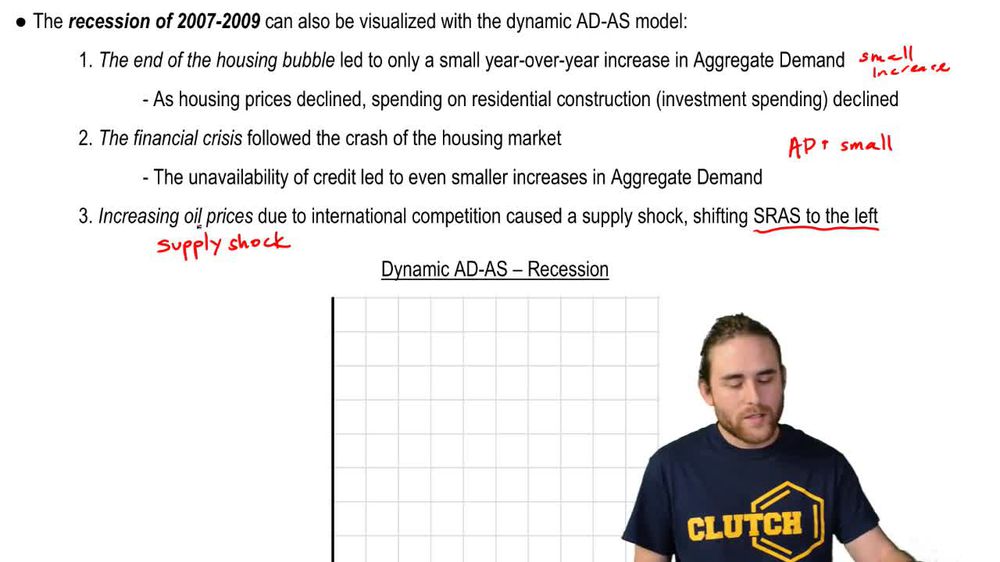
 06:30
06:30