Back

Consumer Surplus and Willingness to Pay quiz #1

Control buttons has been changed to "navigation" mode.
1/39
  • At what point does buying in bulk stop being a wise spending choice?

    Buying in bulk stops being wise when the marginal benefit of additional units is less than the marginal cost or when the extra goods go unused or wasted.
  • Which is an example of a positive incentive for consumers?

    A store offering a discount on a product is a positive incentive for consumers.
  • How do consumers’ feelings about the economy help contribute to growth?

    When consumers feel confident about the economy, they are more likely to spend, increasing demand and contributing to economic growth.
  • Which individual is acting most like a consumer?

    A person purchasing groceries for personal use is acting most like a consumer.
  • What is consumer surplus?

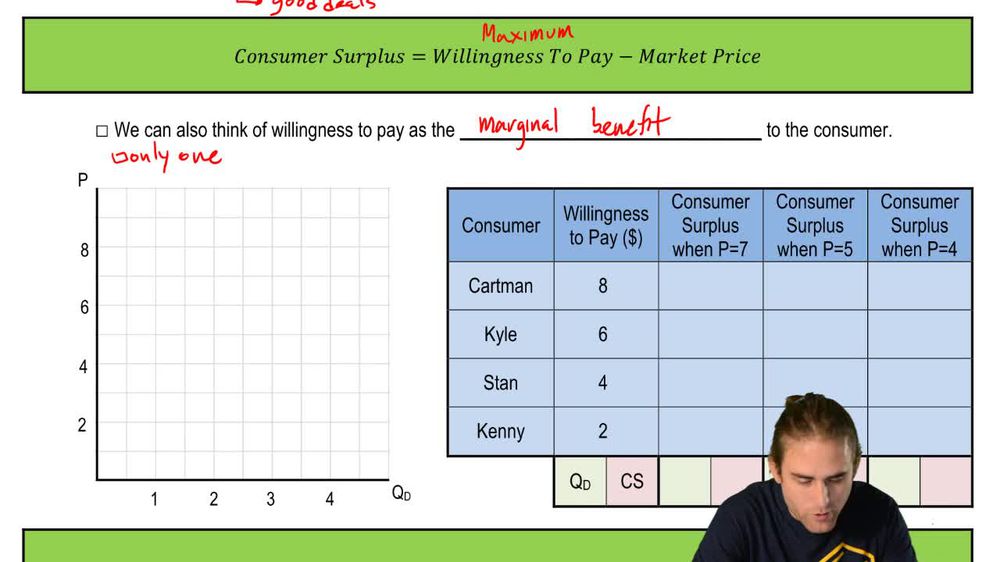
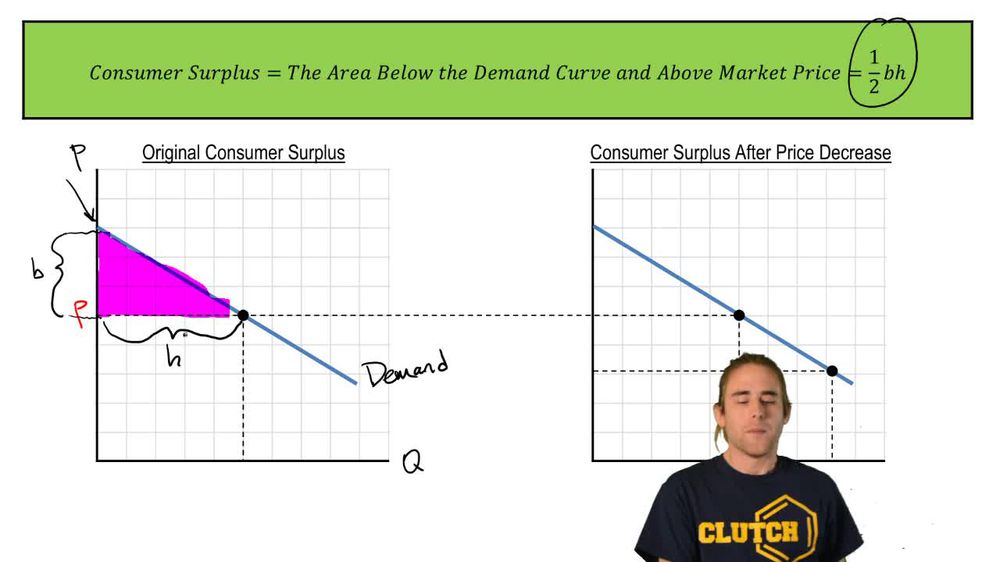
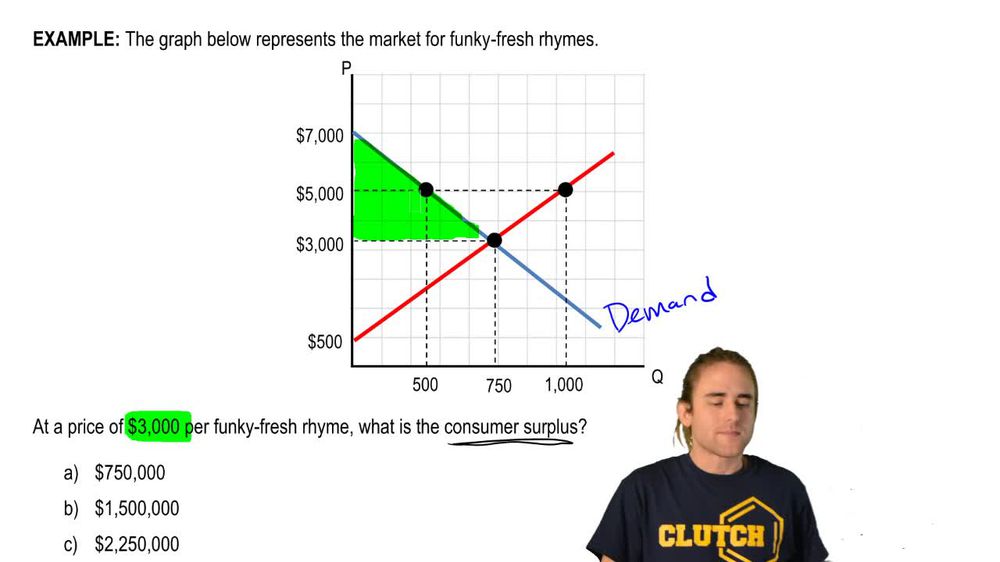
    Consumer surplus is the difference between what a consumer is willing to pay and what they actually pay.
  • How do self-interest and competition affect free markets?

    Self-interest and competition drive efficiency and innovation, leading to better deals and increased consumer surplus.
  • What is an example of a final good or service?

    A loaf of bread sold to a consumer is a final good.
  • How did Cecilia’s knowledge of economics help her make a savvy commodity purchase?

    Cecilia used her understanding of consumer surplus and willingness to pay to buy a commodity at a price below her maximum willingness to pay.
  • Which best describes the role of a consumer?

    A consumer purchases goods and services for personal use, creating demand in the market.
  • How do consumer expectations affect demand?

    If consumers expect prices to rise, current demand increases; if they expect prices to fall, current demand decreases.
  • What factors contribute to consumer buying power?

    Income, prices of goods, and availability of substitutes contribute to consumer buying power.
  • By what process are consumer decisions made?

    Consumer decisions are made by comparing marginal benefits and marginal costs.
  • Which market segment anticipates a customer’s needs?

    A target market segment anticipates and responds to customer needs.
  • How many ways can you make the change for a dollar?

    There are multiple ways to make change for a dollar using different combinations of coins and bills.
  • How is the value of a good or service determined?

    The value is determined by the consumer's willingness to pay, as represented by the demand curve.
  • What factors affect sales?

    Price, consumer preferences, income, and the availability of substitutes and complements affect sales.
  • Demand-oriented pricing approaches weigh which factors most heavily?

    They weigh consumer willingness to pay and perceived value most heavily.
  • What is one factor that will determine how much a customer is willing to pay for a good or service?

    The perceived benefit or utility the customer expects to receive.
  • When consumers seek to maximize their total utility, what are they doing?

    They are making choices that provide the greatest difference between total benefit and total cost.
  • What is the main reason that business organizations buy products?

    To use them in production or operations to create value or profit.
  • What does the phrase “keeping up with the Joneses” refer to in consumer behavior?

    Buying goods to match the consumption patterns of others, often for social status.
  • What must occur for the perceived value of a cheaper product to be high?

    The product must provide benefits that meet or exceed consumer expectations relative to its price.
  • What is the ability of buyers to affect the price they must pay for an item?

    Bargaining power of buyers.
  • Why do firms engage in product differentiation if it adds to the firm's costs?

    To increase consumer willingness to pay and capture more consumer surplus.
  • What is the premise behind the pricing of prestige products or services?

    Higher prices can signal higher quality and increase perceived value, attracting certain consumers.
  • What's the term for reducing the price of an item in order to encourage sales?

    Discounting.
  • What is an example of a change in buyers' tastes?

    A shift in consumer preference from regular soda to diet soda.
  • What is an advantage that a house buyer has?

    The ability to negotiate price and potentially gain consumer surplus.
  • What term refers to the inherent value of the product in the marketplace?

    Market value.
  • What does market segmentation involve?

    Dividing the market into groups based on similar characteristics or needs.
  • How does pricing affect place decisions?

    Pricing can influence where a product is sold and which market segments are targeted.
  • Which is the most important factor in a company's willingness to produce a good?

    The expected profit or surplus from selling the good.
  • What are costs that make customers reluctant to switch to another product or service?

    Switching costs.
  • How can a large retailer increase profits by reducing the markup on a fast-selling product?

    By increasing sales volume and attracting more customers, potentially increasing total consumer surplus.
  • What factor can increase the bargaining power of buyers?

    Availability of alternative products or substitutes.
  • Which of these refers to the influence that consumer purchasing demand has on business purchasing?

    Derived demand.
  • What is the purpose of customer insights?

    To understand consumer preferences and willingness to pay, helping firms capture more consumer surplus.
  • All of these are examples of a price except which?

    A consumer's willingness to pay is not a price; it is the maximum amount they are willing to pay.
  • What is an example of economic value created?

    A consumer buying a product for less than their willingness to pay, resulting in consumer surplus.