Back

Consumer Optimum Consumption: Budget Constraint and Indifference Curves definitions

Control buttons has been changed to "navigation" mode.
1/15
  • Budget Constraint

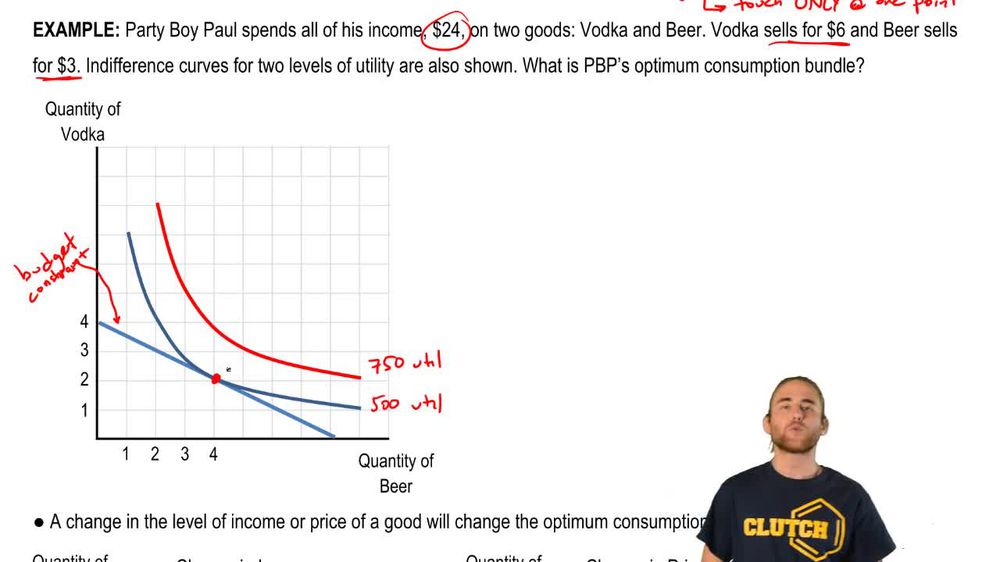
    A line representing all combinations of goods a consumer can afford given income and prices, forming the boundary of possible choices.
  • Indifference Curve

    A curve showing combinations of goods that provide equal satisfaction or utility to a consumer, with higher curves indicating greater utility.
  • Utility

    A measure of satisfaction or happiness a consumer derives from consuming goods and services, often quantified for comparison.
  • Optimum Consumption

    The point where a consumer achieves the highest possible satisfaction within their budget, found at the tangency of constraint and curve.
  • Tangency Condition

    A situation where the budget constraint and an indifference curve touch at only one point, indicating maximum attainable satisfaction.
  • Income

    The total monetary resources available to a consumer for purchasing goods and services, affecting the position of the budget line.
  • Price

    The monetary cost assigned to a good or service, influencing how much of each item a consumer can afford.
  • Utility Maximization

    The process of selecting a combination of goods that yields the greatest possible satisfaction within financial limits.
  • Consumption Possibilities

    The set of all combinations of goods a consumer can purchase given their income and prevailing prices.
  • Satisfaction

    The subjective benefit or pleasure a consumer receives from consuming goods, often reflected in utility levels.
  • Demand Elasticity

    A concept describing how sensitive the quantity demanded of a good is to changes in price or income.
  • Origin

    The point on a graph where the quantities of all goods are zero, used as a reference for measuring utility levels.
  • Marginal Utility

    The additional satisfaction gained from consuming one more unit of a good, influencing the shape of indifference curves.
  • Parallel Shift

    A movement of the budget constraint outward or inward, maintaining its slope, typically caused by changes in income.
  • Affordable Set

    All combinations of goods lying on or below the budget constraint, representing feasible choices for the consumer.