Skip to main content
Microeconomics
My Course
Learn
Exam Prep
AI Tutor
Study Guides
Flashcards
Explore
Try the app
My Course
Learn
Exam Prep
AI Tutor
Study Guides
Flashcards
Explore
Try the app
Back
Characteristics of Monopoly definitions
You can tap to flip the card.
Monopoly
You can tap to flip the card.
👆
Monopoly
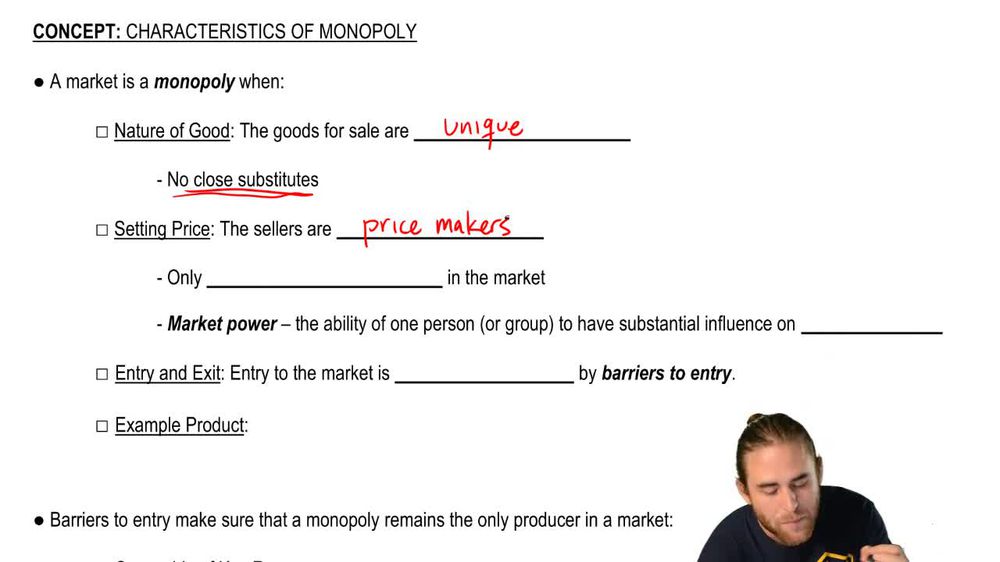
A market structure with a single producer offering a unique product without close substitutes, resulting in significant control over price.
Track progress
Control buttons has been changed to "navigation" mode.
1/15
Related flashcards
Related practice
Recommended videos
Characteristics of Monopoly quiz #1
Characteristics of Monopoly
37 Terms
Characteristics of Monopoly quiz #2
Characteristics of Monopoly
38 Terms
Characteristics of Monopoly quiz #3
Characteristics of Monopoly
11 Terms
Characteristics of Monopoly
12. Monopoly
10 problems
Topic
Monopoly Revenue
12. Monopoly
9 problems
Topic
12. Monopoly
9 topics
13 problems
Chapter
Guided course
06:29
Monopoly Barriers to Entry
6
views
Guided course
02:48
Characteristics of Monopoly
14
views
Guided course
04:17
Monopoly Demand Curve
3
views
Terms in this set (15)
Hide definitions
Monopoly
A market structure with a single producer offering a unique product without close substitutes, resulting in significant control over price.
Unique Goods
Products distinguished by their lack of close substitutes, granting sellers substantial influence in their market.
Price Maker
A seller with the ability to set prices due to exclusive control over a product and absence of competition.
Market Power
The capacity of a firm to influence the price and output of its product within its market.
Barriers to Entry
Obstacles preventing new firms from entering a market, such as resource ownership, government regulation, or cost advantages.
Ownership of Key Resources
Exclusive control over essential inputs required for production, restricting access for potential competitors.
Government Regulation
Legal restrictions, including patents, that grant exclusive production rights and limit market entry.
Patent
A government-issued protection granting exclusive rights to produce and sell an invention, blocking others from entry.
Economies of Scale
Cost advantages achieved when increasing production leads to lower average total costs, favoring large-scale operations.
Natural Monopoly
A market where high fixed costs and ongoing economies of scale make single-firm supply more efficient than multiple firms.
Demand Curve
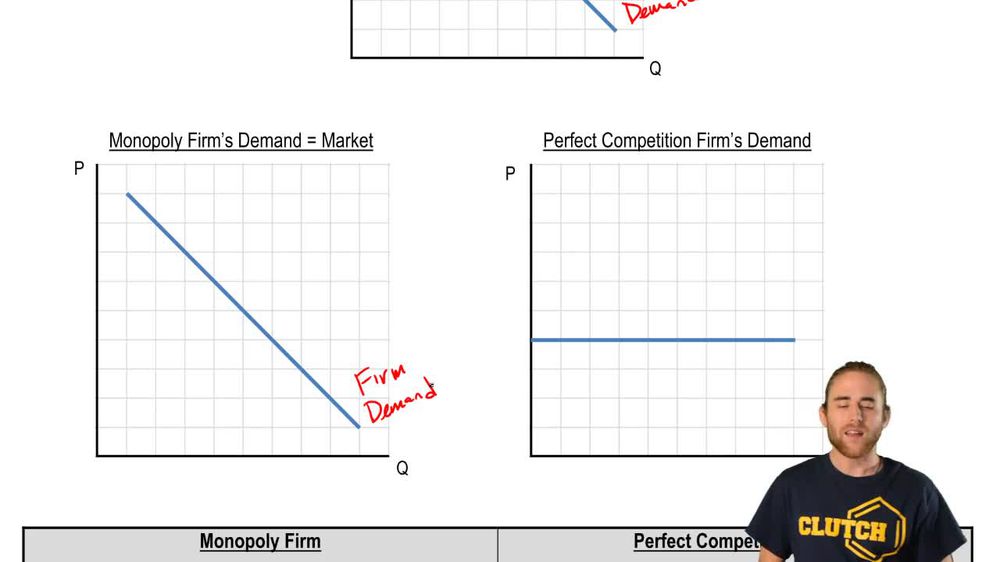
A graphical representation showing the relationship between price and quantity demanded, typically downward sloping in monopoly.
Firm’s Demand Curve
In monopoly, this curve matches the entire market demand, reflecting all consumer demand for the product.
Perfect Competition
A market structure with many sellers offering identical goods, resulting in no individual influence over price.
Perfectly Elastic Demand
A demand curve that is horizontal, indicating buyers will only purchase at a single price, typical in perfect competition.
Marginal Revenue
The additional income from selling one more unit, which decreases as output increases in monopoly due to price reductions.
 BackBack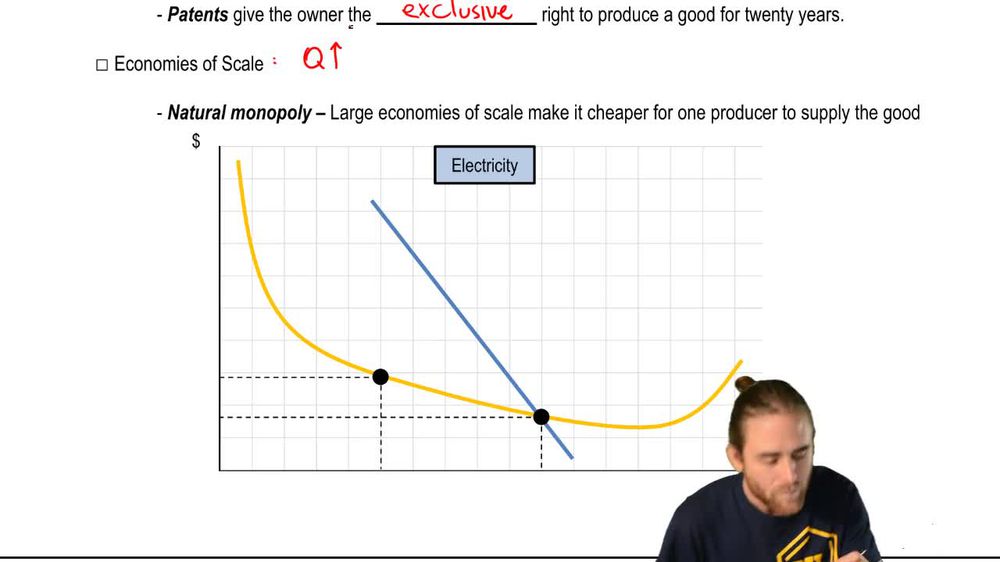
 06:29
06:29