Microeconomics
My Course
Learn
Exam Prep
AI Tutor
Study Guides
Flashcards
Explore
Try the app
My Course
Learn
Exam Prep
AI Tutor
Study Guides
Flashcards
Explore
Try the app
Back
Market Equilibrium definitions
You can tap to flip the card.
Market Equilibrium
You can tap to flip the card.
👆
Market Equilibrium
A state where the quantity supplied equals the quantity demanded, resulting in no tendency for price to change.
Track progress
Control buttons has been changed to "navigation" mode.
1/14
Related flashcards
Related practice
Recommended videos
Market Equilibrium quiz #1
Market Equilibrium
38 Terms
Market Equilibrium quiz #2
Market Equilibrium
40 Terms
Market Equilibrium quiz #3
Market Equilibrium
30 Terms
Market Equilibrium
3. The Market Forces of Supply and Demand
10 problems
Topic
Using the Supply and Demand Curves to Find Equilibrium
3. The Market Forces of Supply and Demand
10 problems
Topic
3. The Market Forces of Supply and Demand
11 topics
15 problems
Chapter
Guided course
04:07
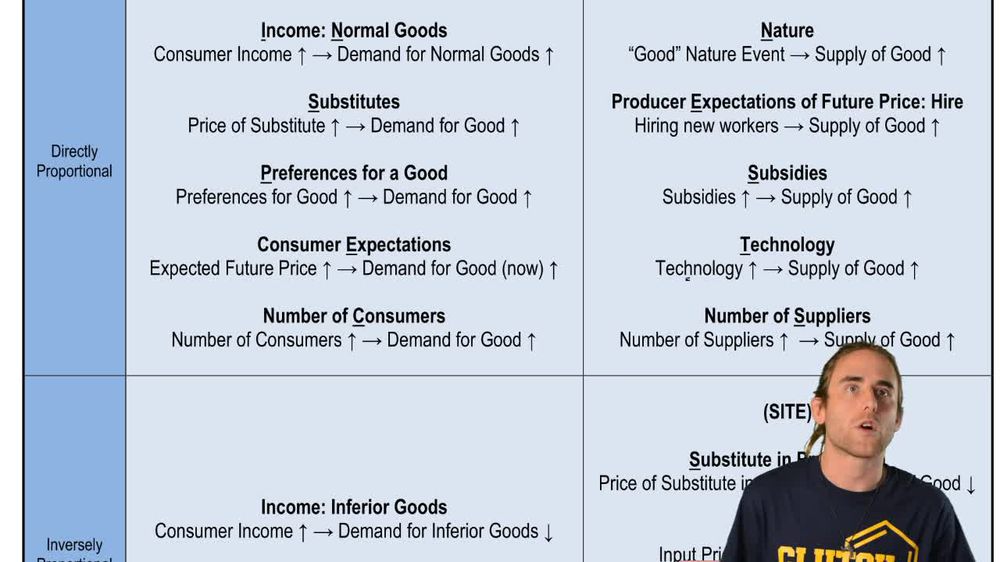
Big Daddy Shift Summary
5
views
Terms in this set (14)
Hide definitions
Market Equilibrium
A state where the quantity supplied equals the quantity demanded, resulting in no tendency for price to change.
Supply Curve
A graphical representation showing the relationship between price and quantity supplied for a good.
Demand Curve
A graph illustrating how the quantity demanded of a good varies with its price.
Nature
Environmental or natural events that can directly affect the availability of goods in the market.
Expectations
Anticipations by producers regarding future prices, influencing decisions to hire or store goods.
Subsidies
Financial support from the government that lowers production costs and encourages increased supply.
Technology
Advancements or improvements in production methods that typically boost the supply of goods.
Suppliers
Entities or individuals providing goods to the market; an increase leads to greater supply.
Substitute in Production
Alternative goods that producers can make; higher prices for these reduce supply of the original good.
Input Prices
Costs of resources like labor and materials required for production; higher costs decrease supply.
Taxes
Government-imposed charges on producers that raise costs and typically lower supply.
Storage
Holding back current production in anticipation of future price changes, reducing present supply.
Shift Summary
A consolidated overview of factors affecting demand and supply, useful for exam preparation.
Movement Along Curve
A change in quantity supplied or demanded due to price variation, without creating a new curve.