Skip to main content
Microeconomics
My Course
Learn
Exam Prep
AI Tutor
Study Guides
Flashcards
Explore
Try the app
My Course
Learn
Exam Prep
AI Tutor
Study Guides
Flashcards
Explore
Try the app
Back
Balance of Trade; Trade Deficit and Trade Surplus definitions
You can tap to flip the card.
Open Economy
You can tap to flip the card.
👆
Open Economy
A system where goods and services are exchanged with other countries, allowing for both imports and exports.
Track progress
Control buttons has been changed to "navigation" mode.
1/15
Related flashcards
Recommended videos
Balance of Trade; Trade Deficit and Trade Surplus quiz
Balance of Trade; Trade Deficit and Trade Surplus
15 Terms
Guided course
06:55
Trade Deficit and Trade Surplus
Terms in this set (15)
Hide definitions
Open Economy
A system where goods and services are exchanged with other countries, allowing for both imports and exports.
Closed Economy
A system that restricts trade with other countries, relying solely on domestic production and consumption.
Export
Goods and services sold to foreign countries, representing domestic production consumed abroad.
Import
Goods and services purchased from foreign countries, reflecting external production consumed domestically.
Trade Surplus
A situation where the value of goods and services sold abroad exceeds those bought from other countries.
Trade Deficit
A condition where the value of goods and services purchased from abroad surpasses those sold to other countries.
Balance of Trade
The difference between the value of exports and imports, indicating whether a country has a surplus or deficit.
Comparative Advantage
A principle where countries specialize in producing goods with lower opportunity costs, enhancing global efficiency.
Opportunity Cost
The value of the next best alternative forgone when choosing to produce one good over another.
Consumption
The use of goods and services by households or the economy, often linked to current output and trade patterns.
Saving
The portion of income not spent on current consumption, often indicating less reliance on imports.
Investment
Allocation of current resources to increase future production, such as building factories or developing technology.
Economic Investment
Spending on assets like factories or machinery to boost future output, distinct from financial investments.
Financial Investment
Allocation of funds to assets like stocks or bonds, typically aimed at earning returns rather than increasing output.
Research and Development
Activities focused on creating new technologies or processes to enhance future productivity and output.
 BackBack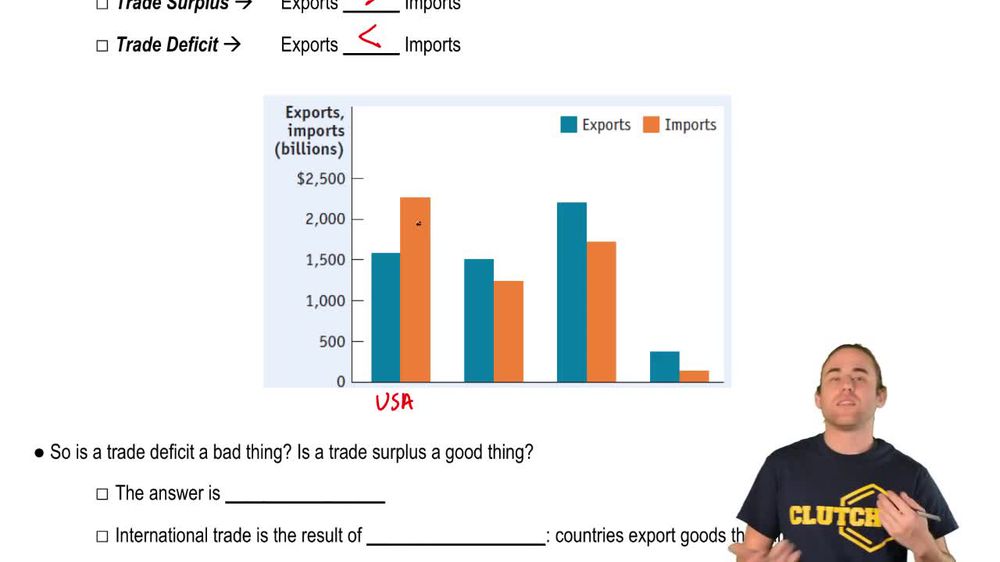
 06:55
06:55