Back

Asymmetric Information: Adverse Selection and Moral Hazard definitions

Control buttons has been changed to "navigation" mode.
1/15
  • Information Asymmetry

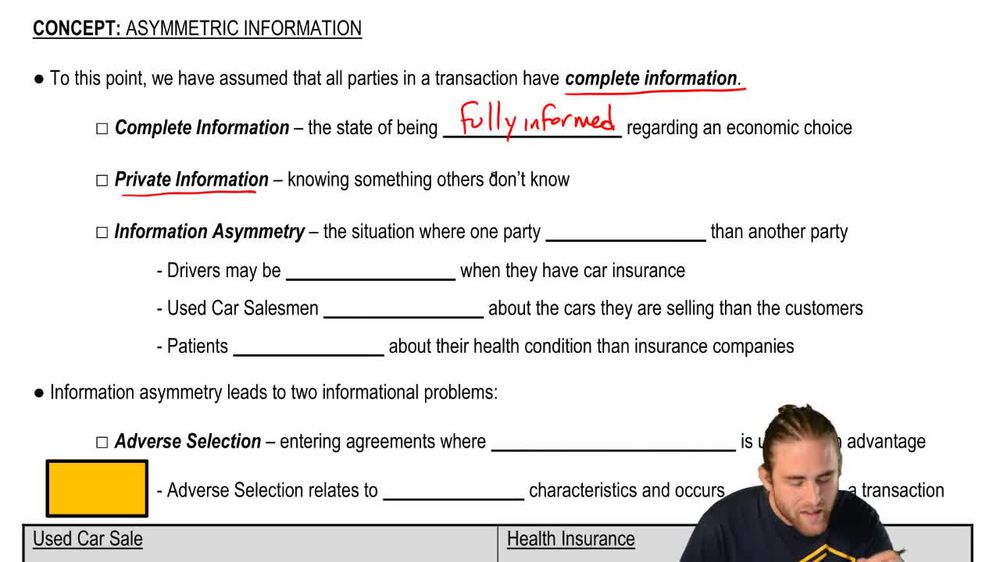
    A situation where one party in a transaction possesses more or superior knowledge compared to the other, often leading to economic inefficiencies.
  • Private Information

    Knowledge held by an individual or group that is not shared with others involved in a transaction, often used for personal advantage.
  • Adverse Selection

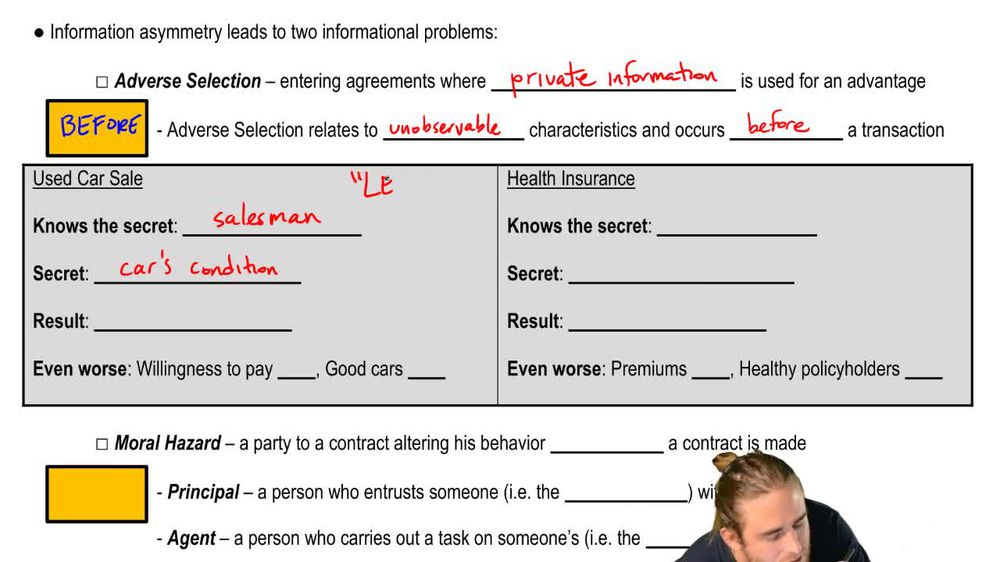
    A problem arising before a transaction when hidden characteristics allow one party to exploit their informational advantage, often worsening market outcomes.
  • Moral Hazard

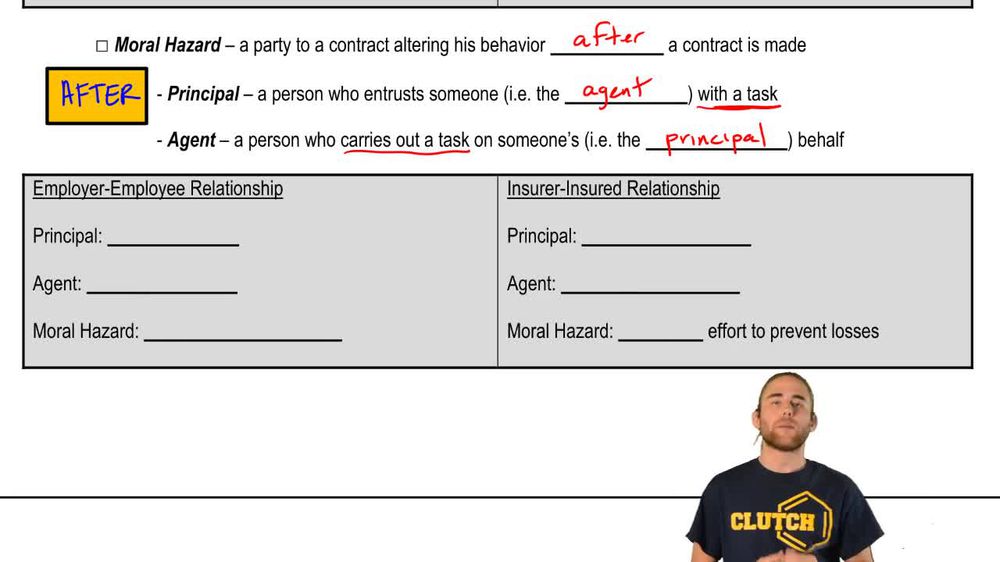
    A risk occurring after a transaction when a party alters their behavior, knowing they are protected or monitored less, potentially causing negative effects.
  • Lemon Problem

    A market issue where buyers fear hidden defects in products, leading to reduced willingness to pay and fewer quality goods available.
  • Principal

    An individual or entity that delegates a task to another, typically expecting the task to be performed in their interest.
  • Agent

    A person or entity entrusted with carrying out a task on behalf of another, often with incentives or compensation.
  • Unobservable Characteristics

    Attributes or qualities that cannot be easily detected or measured by other parties in a transaction, often leading to hidden risks.
  • Insurance Pool

    A group of individuals sharing risk through insurance, where hidden information can make the group riskier than anticipated.
  • Premiums

    Payments made for insurance coverage, which may increase when hidden risks or frequent claims are discovered.
  • Economic Transaction

    An exchange of goods, services, or contracts between parties, often affected by the distribution of information.
  • Monitoring

    The process of overseeing or supervising agents to ensure tasks are performed as expected, often imperfect in practice.
  • Willingness to Pay

    The maximum amount a buyer is prepared to spend for a good or service, influenced by perceived risks and information.
  • Health Insurance

    A contract providing financial protection against medical costs, often complicated by hidden health conditions among policyholders.
  • Risk

    The potential for loss or negative outcomes in economic activities, often heightened by hidden information or behavioral changes.