Ch. 25 - Microbial Diseases of the Digestive System
Tortora - Microbiology: An Introduction 14th Edition
Tortora14th EditionMicrobiology: An IntroductionISBN: 9780138200398Not the one you use?Change textbook
Chapter 25, Problem 2

A patient with nausea, vomiting, and diarrhea within 5 hours after eating most likely has
a. shigellosis.
b. cholera.
c. E. coli gastroenteritis.
d. salmonellosis.
e. staphylococcal food poisoning.

Verified step by step guidance
1
Step 1: Understand the incubation period for each disease listed. The incubation period is the time between ingestion of the pathogen or toxin and the onset of symptoms.
Step 2: Recall that shigellosis, cholera, E. coli gastroenteritis, and salmonellosis typically have incubation periods longer than 5 hours, often ranging from 12 hours to several days.
Step 3: Recognize that staphylococcal food poisoning is caused by ingestion of preformed enterotoxins produced by Staphylococcus aureus, which leads to symptoms such as nausea, vomiting, and diarrhea within a short incubation period, usually 1 to 6 hours.
Step 4: Compare the patient's symptom onset (within 5 hours) to the typical incubation periods of the diseases listed to identify the most likely cause.
Step 5: Conclude that the rapid onset of symptoms (within 5 hours) aligns best with staphylococcal food poisoning, as it is characterized by a short incubation period due to toxin ingestion rather than bacterial infection.

Verified video answer for a similar problem:

This video solution was recommended by our tutors as helpful for the problem above.
Video duration:
2m
Was this helpful?

Key Concepts

Here are the essential concepts you must grasp in order to answer the question correctly.

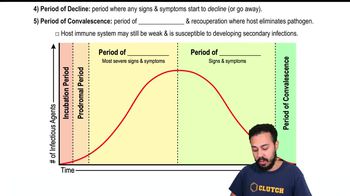
Incubation Period of Foodborne Illnesses

The incubation period is the time between consuming contaminated food and the onset of symptoms. Rapid onset (within a few hours) often indicates intoxication by preformed toxins, while longer incubation suggests infection by bacteria that need to multiply. Understanding incubation helps differentiate between types of food poisoning.
Recommended video:
Guided course
05:36
Stages of Infectious Disease Progression

Staphylococcal Food Poisoning

Caused by ingestion of enterotoxins produced by Staphylococcus aureus in contaminated food, this illness typically presents with nausea, vomiting, and diarrhea within 1 to 6 hours. It is a classic example of food intoxication with rapid symptom onset due to preformed toxins.
Recommended video:
Guided course
03:15
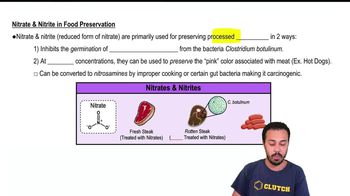
Nitrate & Nitrite in Food Preservation

Differences Between Food Infection and Food Intoxication

Food infection involves ingestion of live pathogens that multiply in the host, leading to symptoms after a longer incubation. Food intoxication results from consuming toxins produced by bacteria in food, causing rapid symptoms. Recognizing this distinction aids in identifying the causative agent based on symptom timing.
Recommended video:
Guided course
03:15
Nitrate & Nitrite in Food Preservation