


Ch. 22 - Microbial Diseases of the Nervous System
Tortora - Microbiology: An Introduction 14th Edition
Tortora14th EditionMicrobiology: An IntroductionISBN: 9780138200398Not the one you use?Change textbook
Chapter 22, Problem 3

Why is the following description used for wounds that are susceptible to C. tetani infection: “. . . Improperly cleaned deep puncture wounds . . . ones with little or no bleeding . . .”?

Verified step by step guidance
1
Understand that Clostridium tetani is an obligate anaerobic bacterium, meaning it thrives in environments with little to no oxygen.
Recognize that deep puncture wounds create a low-oxygen environment because they are narrow and deep, limiting oxygen penetration, which favors the growth of C. tetani.
Note that wounds with little or no bleeding do not flush out bacteria effectively, allowing C. tetani spores to remain and germinate in the wound site.
Consider that improper cleaning of wounds fails to remove dirt, debris, and bacterial spores, increasing the risk of infection by C. tetani.
Combine these factors to explain why the description emphasizes 'improperly cleaned deep puncture wounds with little or no bleeding' as particularly susceptible to C. tetani infection.

Verified video answer for a similar problem:

This video solution was recommended by our tutors as helpful for the problem above.
Video duration:
1m
Was this helpful?

Key Concepts

Here are the essential concepts you must grasp in order to answer the question correctly.

Clostridium tetani Characteristics

Clostridium tetani is an anaerobic, spore-forming bacterium that thrives in low-oxygen environments. Its spores can survive in soil and enter the body through wounds, especially deep punctures, where oxygen is limited, allowing the bacteria to germinate and produce tetanus toxin.
Recommended video:
Guided course
05:09
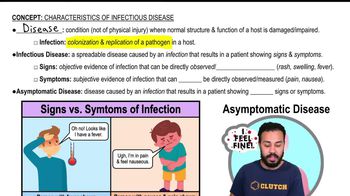
Intro to Characteristics of Infectious Disease

Wound Environment and Oxygen Levels

Deep puncture wounds with little or no bleeding create an anaerobic environment because blood flow and oxygen exposure are minimal. This low-oxygen condition favors the growth of anaerobic bacteria like C. tetani, increasing the risk of infection.
Recommended video:
Guided course
03:52
Oxygen Requirements for Microbial Growth

Importance of Proper Wound Cleaning

Proper cleaning of wounds removes dirt, debris, and bacterial spores, reducing infection risk. Improperly cleaned wounds may retain C. tetani spores, allowing them to germinate and produce toxin, which can lead to tetanus, a serious neuromuscular disease.
Recommended video:
Guided course
01:25
Importance of Microorganisms
Related Practice
Textbook Question

After receiving a corneal transplant, a patient developed dementia and loss of motor function, then became comatose and died. Cultures were negative. Serological tests were negative. Autopsy revealed spongiform degeneration of brain tissue. The patient most likely had

a. Rabies.

b. Creutzfeldt-Jakob disease.

c. Botulism.

d. Tetanus.

e. Leprosy.

2
views
Textbook Question

What treatment is used against tetanus under the following conditions?

a. Before a person suffers a deep puncture wound

b. After a person suffers a deep puncture wound

1
views
Textbook Question

Endotoxin is responsible for symptoms caused by which of the following organisms?

a. N. meningitidis

b. S. pyogenes

c. L. monocytogenes

d. C. tetani

e. C. botulinum

Textbook Question

Provide the following information on poliomyelitis: etiology, method of transmission, symptoms, prevention. Why aren’t the Salk and Sabin vaccines considered treatments for poliomyelitis?

7
views
Textbook Question

Which of the following does not have an animal reservoir or vector?

a. Listeriosis

b. Cryptococcosis

c. Amebic meningoencephalitis

d. Rabies

e. African trypanosomiasis

1
views
Textbook Question

A 12-year-old child hospitalized for Guillain-Barré syndrome had a 4-day history of headache, dizziness, fever, sore throat, and weakness of legs. Seizures began 2 weeks later. Bacterial cultures were negative. The child died 3 weeks after hospitalization. An autopsy revealed inclusions in brain cells that tested positive in an immunofluorescence test. This patient probably had

a. Rabies.

b. Creutzfeldt-Jakob disease.

c. Botulism.

d. Tetanus.

e. Leprosy.