
Ch. 20 - Antimicrobial Drugs
Tortora - Microbiology: An Introduction 14th Edition
Tortora14th EditionMicrobiology: An IntroductionISBN: 9780138200398Not the one you use?Change textbook
Chapter 20, Problem 10

This microorganism is not susceptible to antibiotics or neuromuscular blocks, but is susceptible to protease inhibitors.

Verified step by step guidance
1
Step 1: Identify the key characteristics of the microorganism based on the problem statement: it is not susceptible to antibiotics or neuromuscular blocks, but it is susceptible to protease inhibitors.
Step 2: Understand that typical bacteria are usually susceptible to antibiotics, so the microorganism is likely not a bacterium. Also, neuromuscular blocks affect nerve-muscle communication, which is not a typical target for microorganisms.
Step 3: Recognize that susceptibility to protease inhibitors suggests the microorganism relies on protease enzymes for its life cycle or pathogenicity. Protease inhibitors are commonly used against viruses, especially retroviruses like HIV.
Step 4: Recall that HIV (Human Immunodeficiency Virus) is resistant to antibiotics (which target bacteria) and neuromuscular blockers, but is effectively targeted by protease inhibitors, which block viral protease enzymes essential for viral maturation.
Step 5: Conclude that the microorganism described is most likely HIV, based on its unique susceptibility profile.

Verified video answer for a similar problem:

This video solution was recommended by our tutors as helpful for the problem above.
Video duration:
1m
Was this helpful?

Key Concepts

Here are the essential concepts you must grasp in order to answer the question correctly.

Antibiotic Susceptibility

Antibiotic susceptibility refers to whether a microorganism can be inhibited or killed by antibiotics. Some microbes have intrinsic resistance or mechanisms that prevent antibiotics from affecting them, which is crucial for determining effective treatments.
Recommended video:
Guided course
03:43
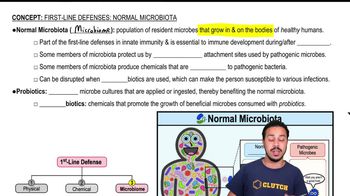
Normal Microbiota

Neuromuscular Blockers and Their Targets

Neuromuscular blockers interfere with nerve signal transmission to muscles, typically targeting receptors or ion channels in eukaryotic cells. Microorganisms generally lack these neuromuscular junctions, making them inherently resistant to such agents.
Recommended video:
Guided course
04:27
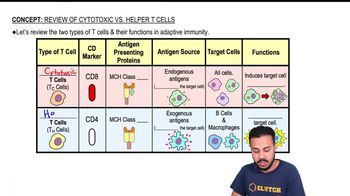
Review of Cytotoxic vs Helper T Cells

Protease Inhibitors and Their Mechanism

Protease inhibitors block the activity of protease enzymes, which are essential for processing proteins in some microorganisms, especially viruses. Susceptibility to protease inhibitors indicates the microorganism relies on protease activity for replication or survival.
Recommended video:
Guided course
01:59
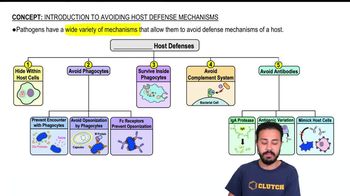
Introduction to Avoiding Host Defense Mechanisms