Ch. 20 - Antimicrobial Drugs
Tortora - Microbiology: An Introduction 14th Edition
Tortora14th EditionMicrobiology: An IntroductionISBN: 9780138200398Not the one you use?Change textbook
Chapter 20, Problem 6

Antibiotics that inhibit translation have side effects:
a. Because all cells have proteins
b. Only in the few cells that make proteins
c. Because eukaryotic cells have 80S ribosomes
d. At the 70S ribosomes in eukaryotic cells
e. None of the above is correct

Verified step by step guidance
1
Step 1: Understand the mechanism of antibiotics that inhibit translation. These antibiotics target the ribosomes, which are the molecular machines responsible for protein synthesis in cells.
Step 2: Recall that prokaryotic ribosomes are 70S, while eukaryotic ribosomes are 80S. Many antibiotics specifically target 70S ribosomes to inhibit bacterial protein synthesis without affecting eukaryotic cells significantly.
Step 3: Consider why side effects occur. Although antibiotics target bacterial 70S ribosomes, mitochondria in eukaryotic cells also contain 70S-like ribosomes, which can be affected, leading to side effects.
Step 4: Evaluate each answer choice in light of this information: (a) is too general, (b) is incorrect because all cells make proteins, (c) is incorrect because eukaryotic cytoplasmic ribosomes are 80S and usually not targeted, (d) is correct because side effects arise due to action on 70S ribosomes in mitochondria of eukaryotic cells, (e) is incorrect if (d) is correct.
Step 5: Conclude that the side effects of translation-inhibiting antibiotics are due to their action on 70S ribosomes present in eukaryotic mitochondria, which explains why option (d) is the best choice.

Verified video answer for a similar problem:

This video solution was recommended by our tutors as helpful for the problem above.
Video duration:
1m
Was this helpful?

Key Concepts

Here are the essential concepts you must grasp in order to answer the question correctly.

Mechanism of Antibiotics Targeting Translation

Many antibiotics inhibit bacterial protein synthesis by targeting the 70S ribosomes unique to prokaryotes. This selective inhibition disrupts bacterial growth without directly affecting eukaryotic 80S ribosomes, making these antibiotics effective against bacteria while minimizing harm to human cells.
Recommended video:
Guided course
06:12
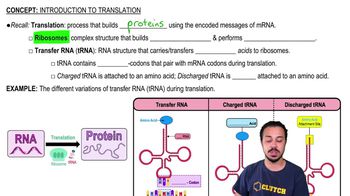
Introduction to Translation

Differences Between Prokaryotic and Eukaryotic Ribosomes

Prokaryotic cells have 70S ribosomes, while eukaryotic cells contain larger 80S ribosomes. This structural difference allows certain antibiotics to selectively inhibit bacterial translation without affecting eukaryotic protein synthesis, although some side effects may occur due to similarities in mitochondrial ribosomes.
Recommended video:
Guided course
01:51
Prokaryotic Ribosomes

Side Effects Due to Mitochondrial Ribosomes

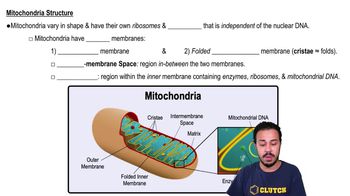
Eukaryotic mitochondria contain 70S ribosomes similar to bacterial ribosomes. Antibiotics targeting 70S ribosomes can inadvertently affect mitochondrial protein synthesis, leading to side effects in human cells despite the primary target being bacterial ribosomes.
Recommended video:
Guided course
04:29
Mitochondria Structure